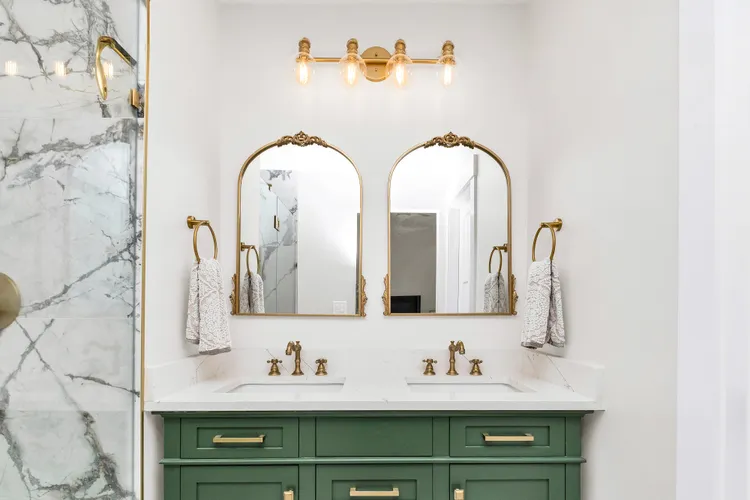
Looking to majorly upgrade your bathroom? The solution may be all in your lighting. Not incorporating the right types of fixtures in your getting ready space can put a major damper on how you feel about this room of the home from both a functional and aesthetic perspective. Luckily, making some small yet impactful tweaks can easily turn things around.
We spoke with three interior designers who share five common bathroom lighting mistakes that people should always avoid in their homes, and what they should aim to do instead.
Using Just the One Type of Light
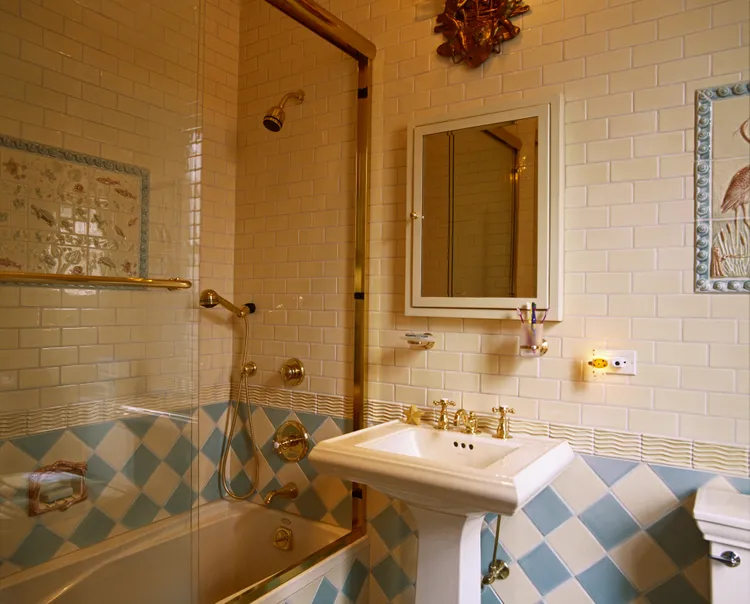
In any room, whether it’s your main living area or your bathroom, it’s important to not just rely on one type of light, designers explain. Why, exactly?
“Relying on just one overhead light casts shadows and makes tasks like shaving or makeup tricky,” says Andrea Schumacher, the founder of Andrea Schumacher Interiors.
But it isn’t just the big light that is the problem. Similarly, relying solely on your vanity lights isn’t great either, the designer adds, noting that these can result in “unflattering shadows.”
Your better bet is to layer in a few types of lighting, resulting in a mixture of ambient, task, and accent lighting all working in tandem, as is recommended in any other room, Schumacher explains.
Installing Your Vanity Lighting Incorrectly
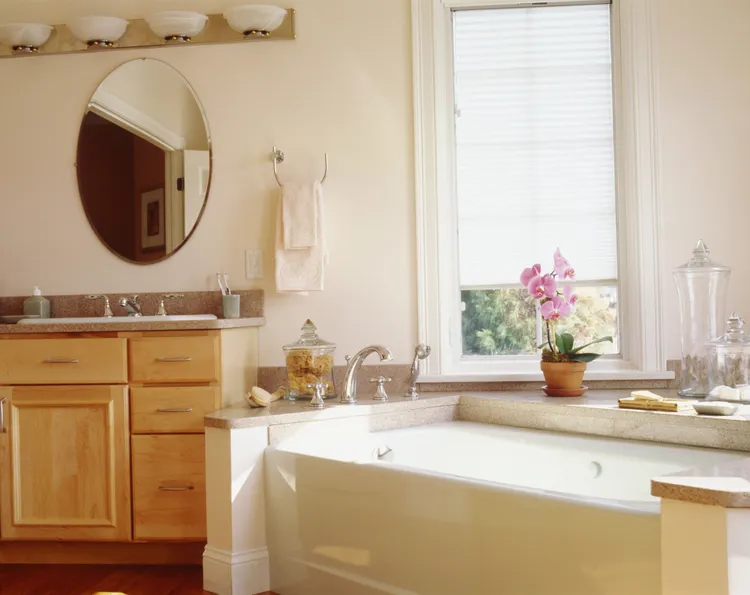
Speaking of vanity lighting, it’s important to note that these fixtures should not go directly above your vanity, Lesley Myrick, the founder of Lesley Myrick Interior Design, explains, noting that it’s best to mount sconces at eye level and place them on either side of your mirror.
This tactic, she says, is optimal for a variety of reasons, noting, “It will shine even, flattering light on your face, ideal for your skincare routine or makeup application.”
As it pertains to specific fixture heights, Robbie Maynard, the founder of Robbie Maynard Interiors, recommends installing vanity bar lights about six or seven feet off the ground. An even better combination would be to pair this light height with a mirror that is higher than six feet tall, the designer explains, noting that doing so will help to create a more spacious and elevated looking bathroom.
Not Considering Proper Physical Placement
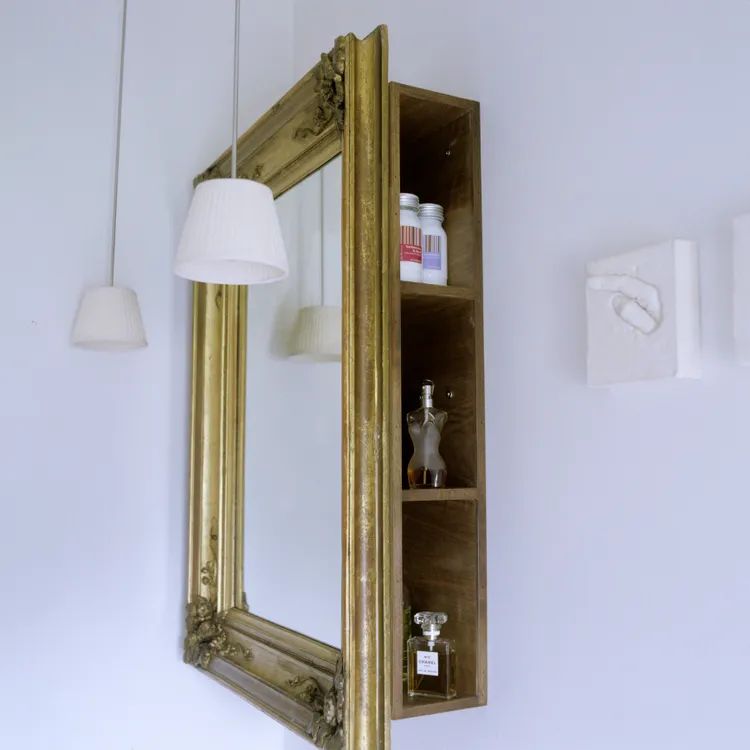
In addition to installing your bathroom features so that they’re nice and functional, you will also want to be mindful that their placement doesn’t interfere with how you’re using the space, Maynard explains.
For example, she says, when it comes to wall sconces, you will want to make sure that you can open and close your medicine cabinet without hitting one of the sconces. And if you use a chandelier, make sure that your bathroom door doesn’t hit it while opening, of course, she adds.
Using the Wrong Bulb Temperature
Think all lightbulbs are created equal? Think again. Schumacher stresses the importance of landing on the right bulb temperature for your bathroom.
“Too cool feels harsh, too warm feels orange,” she says. The best bulb temperature to strive for is 2700K–3000 Kelvin, which she says will create “a flattering glow.”
Getting ready for the day and winding down while following your skincare routine at night has never looked better!
Not Putting the Right Fixtures in the Right Areas of the Room
The last thing you will want to do is spend time and energy selecting and installing bathroom light fixtures that speak to you, only to find out that they’re unusable because of the location where you placed them. For example, while Maynard finds that chandeliers can look lovely in a bathroom, she cautions against ever installing them above a bathtub.
“This can be dangerous if the fixture can be touched while standing in the tub or reached by shower spray,” she says.
Instead, you are much better off hanging a chandelier above the sink or in another getting ready nook, if your space is a bit larger.