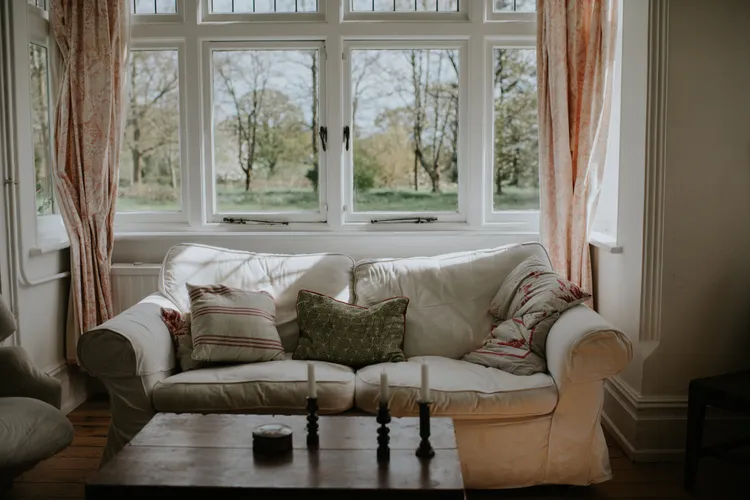
When it comes to budget-friendly room revamps, living rooms are a great place to start because they don’t have big appliances or plumbing to factor into the transformation cost.
Sure, they might have dated features like a wall color that needs updating or window treatments from another decade, but those things are relatively easy to fix—and easy on the wallet.
We spoke with interior designers for a few more ideas on transforming a living room on a budget.
Add Personality with Wallpaper
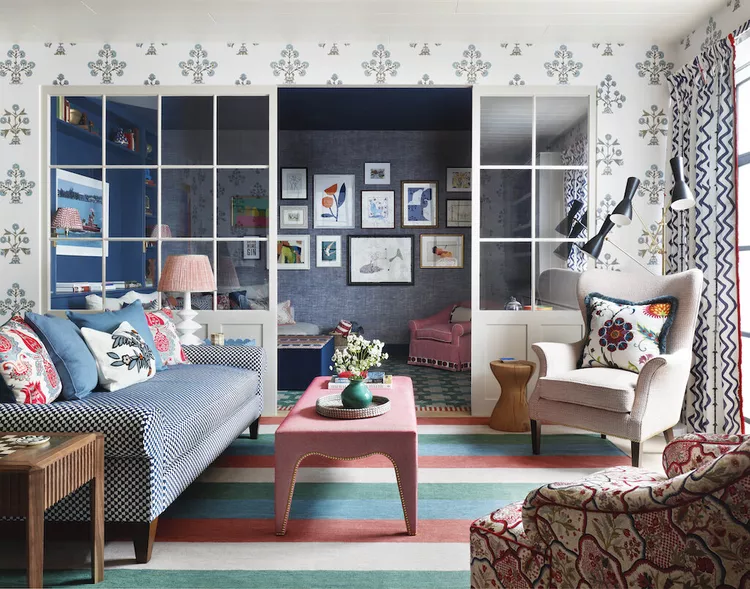
Don’t be afraid to take risks with color or pattern, says Jessica Shaw, director of interiors at The Turett Collaborative. She suggests looking for a self-adhesive or peel-and-stick wallpaper that speaks to you.
Online retailers and maker markets such as Etsy are good sources for a slew of patterns, styles, and themes. What makes peel-and-stick so DIY-friendly is the fact that it’s not permanent. If you tire of the pattern (or make a mistake or spot an air bubble), you can peel the paper off and start over.
Choose a Contemporary Paint Color
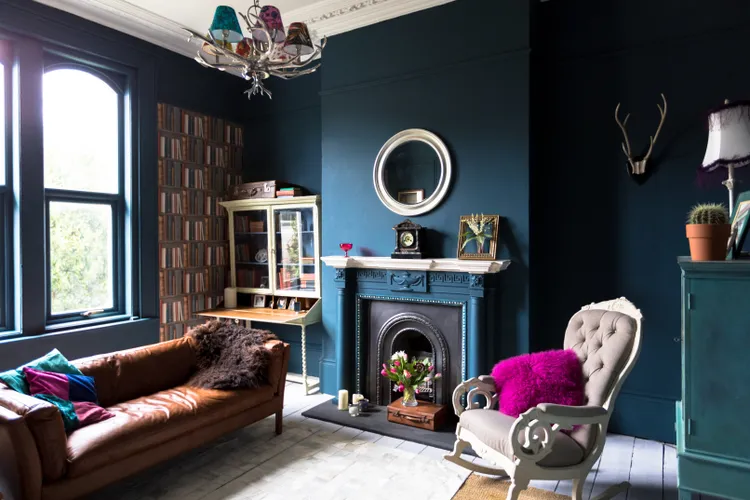
Drenching a room in color is equally dramatic (and perhaps even more DIY-friendly), Shaw says, and it’s even lower stakes than wallpaper. “It is just paint, after all,” she says.
Mallory Robins, a partner at Kobel + Co, also recommends painting to update the living room on a budget significantly.
“Whether you change entire walls or paint outdated trim, it will instantly reset the room,” she says.
Reevaluate the Floor Plan
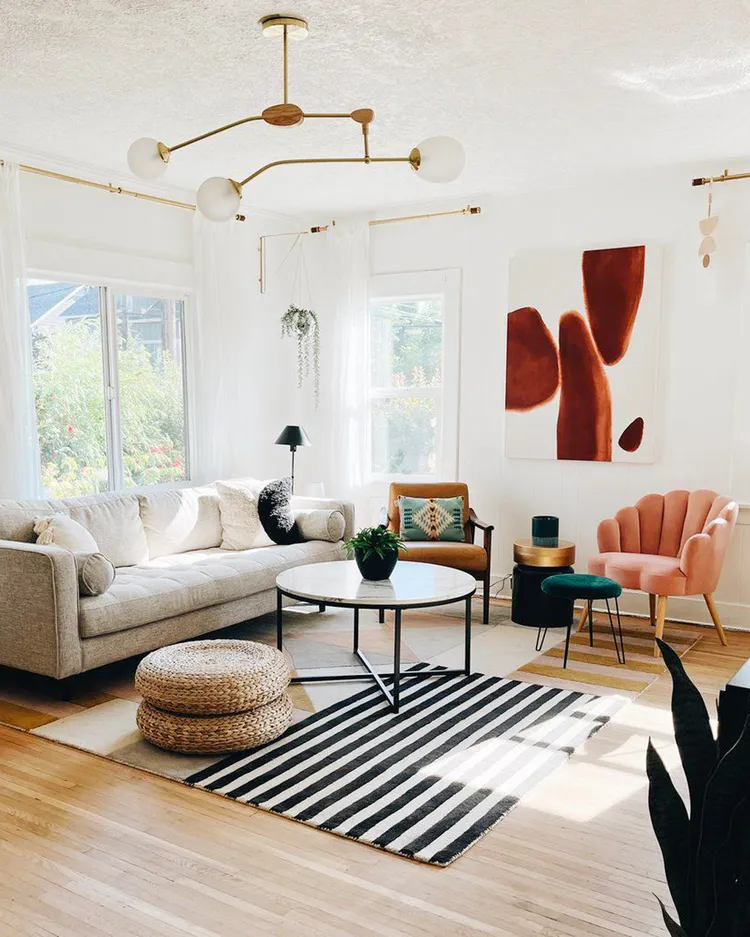
You can also give a living room a new feel without having to spend any money at all—just by putting your old things in new places.
Elizabeth Bennett, a partner at Kobel + Co design studio, says “a thoughtful reconfiguration—such as floating a sofa, reworking a conversation area, or clearing a visual pathway—can make the entire space feel new without spending a dime.”
To gauge what doesn’t work, she suggests you look at both the current furniture arrangement and the sight lines into, through, and around the room.
Layer the Lighting
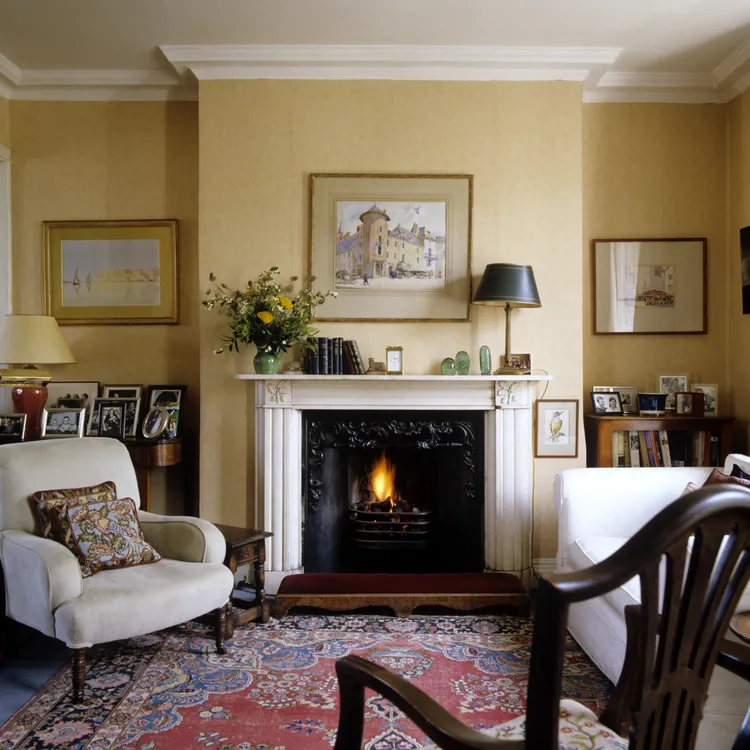
You might not be able to change canned lighting or wiring in your living room, but you can change things like lightbulbs and lamps—and even make light fixture swaps if you’re up for it.
“It’s more about understanding what you have and what you can change or add to it,” Shaw says.
Shaw points to the possibility of hanging a pendant or repositioning a floor lamp to highlight a particular chair or sofa. Even a simple LED strip light under a shelf or a picture light above wall art can add moodiness or character.
Bennett likes 2700k (warm white color temperature) light bulbs as opposed to more clinical white ones, and she encourages taking advantage of dimmers throughout the day. She also suggests swapping old lampshades or adding a floor lamp in a dark corner.
Add (or Replace) a Rug
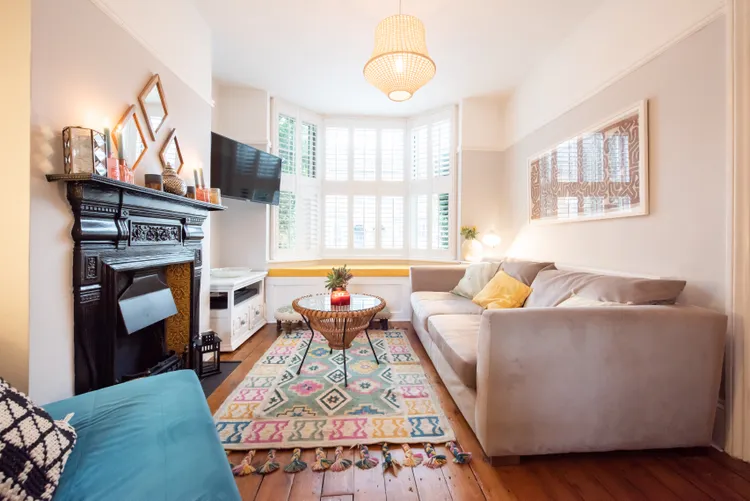
Although they’re not at eye level, rugs are often the largest thing in a living room and can make a drastic difference. If you can only buy one thing, try a rug, suggests Shaw.
“Introducing a new color palette or adding texture that wasn’t there before can completely reinvent the space,” she says.
Because they come in many styles, rugs can instantly create an aesthetic shift, whether you’re going for a bold pop of color, something muted and soft underfoot, or something vintage.
Curate Your Accessories
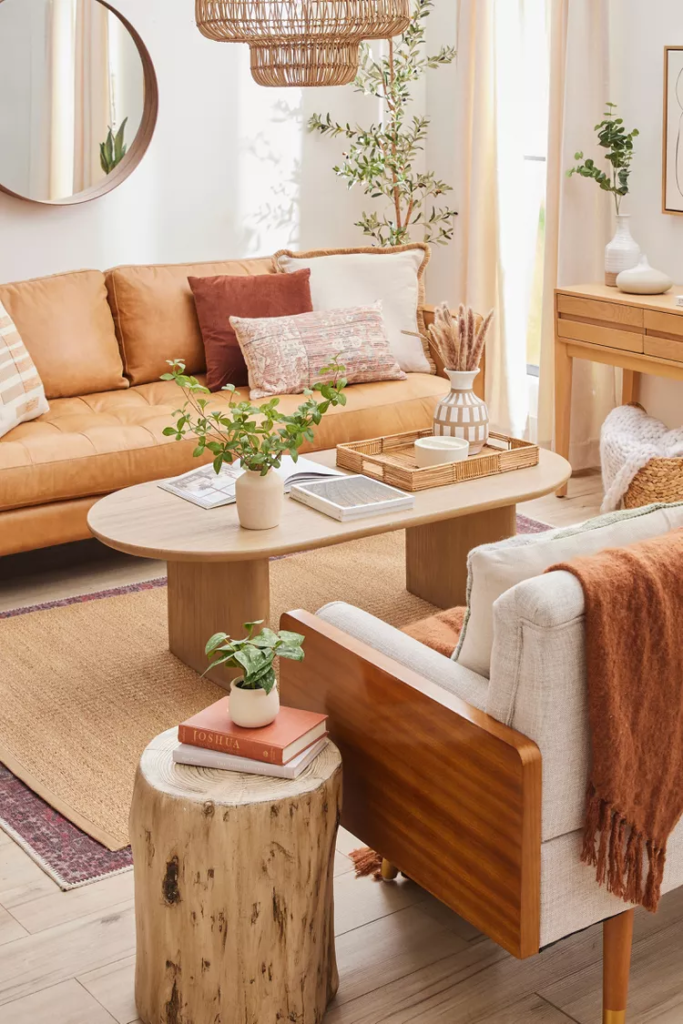
Think about small touches like blankets, pillows, and decorative objects. They’re easy, inexpensive to change, and can give a room a fresh new identity, according to Shaw, who cites as an example swapping out patterned throws for single-color blankets, taking the sofa from eclectic to something more streamlined.
But don’t overdo the accessories. Too many small objects in the room can make the space feel cluttered and dated, Robins says. For a refresh, she recommends removing everything from shelves, tables, and mantels, and adding back only what you love.
“Group items intentionally, mix heights and materials, and leave plenty of breathing room,” she says.
Incorporate Plants
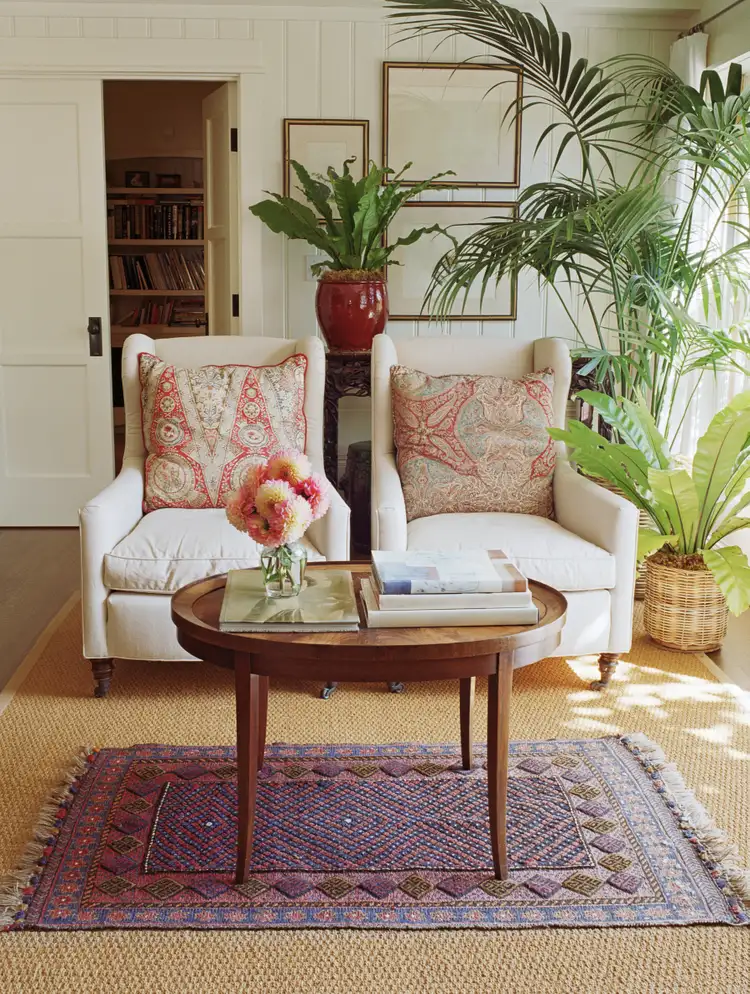
Whether you opt for a huge potted fig tree or a collection of small succulents on a windowsill or shelf, live greenery can also breathe a bit of life into a stale living room, Shaw says.
“Arrange your plants thoughtfully to create a balanced composition of green,” she says.