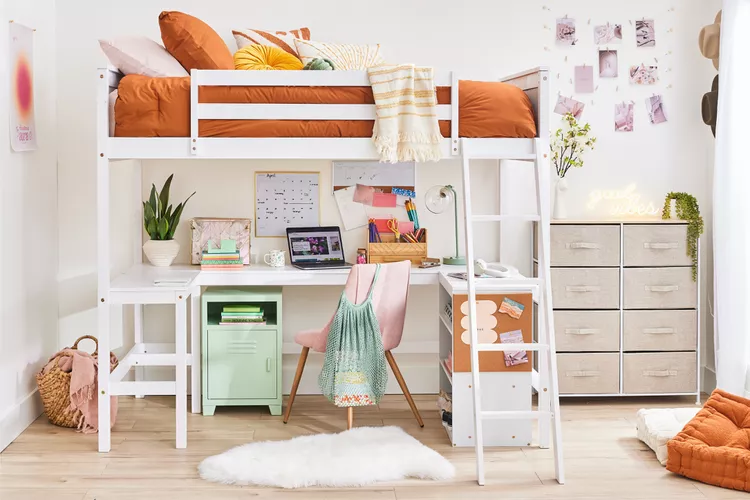
Dorm living is a major transition for any student, and most reasons boil down to space. Dorm rooms are notoriously small, and this is compounded by the fact students often share these rooms with at least one other person—usually a stranger.
To help ease any anxiety around this milestone, it’s helpful to plan ahead. We checked in with two designers who know and understand decorating smaller spaces, and asked them to share their insights on how to make dorm rooms feel bigger, better, and more functional.
Stick With a Cohesive Color Palette
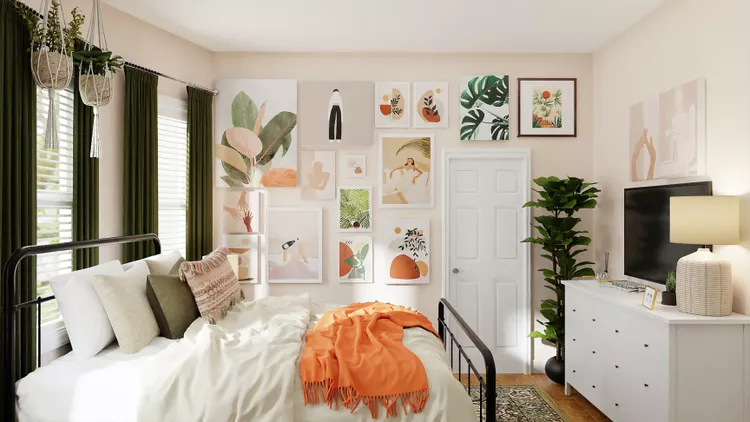
Too many mismatched colors in a small space can create instant visual overwhelm, and this is often the case in dorm rooms. If you want to make your room feel bigger and brighter, interior designer Olivia Erwin Rosenthal suggests sticking with a cohesive color palette, ideally in softer tones.
“Neutral tones and layered textures make a room feel calmer and more expansive,” says Erwin Rosenthal.
Opt for Few, Big Storage Bins
If you’re bringing extra storage items, home design therapist Anita Yokota says it’s a good idea to consider both scale and volume.
“Oversized storage may seem practical but can dominate the room and disrupt flow,” she says. “Instead, go for slimmer pieces with open bases or clear legs.”
These items should be functional and easy to slot into the room without too much visual bulk—but you don’t want to opt for anything too small, either.
“Many small storage bins might seem organized, but they fragment the room,” Yokota explains.
Instead, Yokota suggests creating a streamlined command center; a consistent storage system will keep all your clutter contained and accessible.
Invest in Multi-Use Furniture
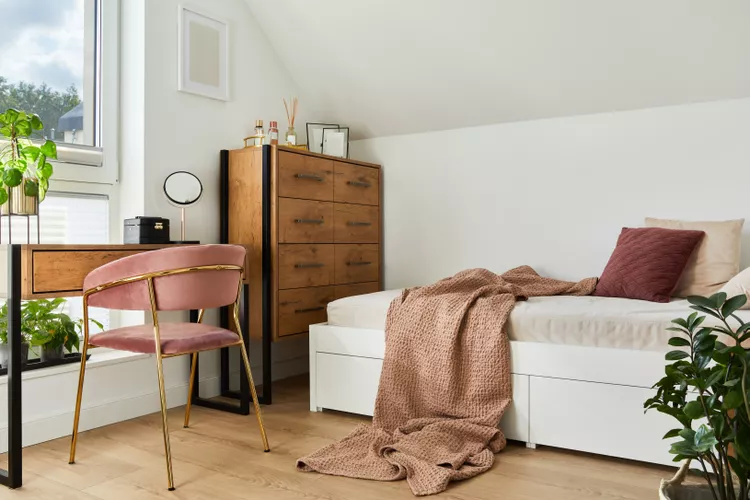
Whether you’re moving into a room that’s already furnished or you’re working with a blank space, Erwin Rosenthal says multi-use furniture can be a godsend.
“Choose ottomans that double as storage or a pouf that can act as extra seating or a side table,” she says.
If you need to get creative with existing pieces, you can make them more functional by elevating things off the floor.
“Risers for the bed or wall-mounted lighting [can] create more floor space,” says Erwin Rosenthal.
Don’t Fall for Minimalism
Often, people think the best way to create space is to have fewer items. This can be true, but the aesthetic effect is probably not worth it.
“Going too sparse can feel sterile and dorm-like in the worst way,” explains Erwin Rosenthal. “Instead of stripping it down, be intentional.”
She suggests making the items you do have really count. Think layered, textural bedding and an eye-catching rug.
Define Zones With Lighting
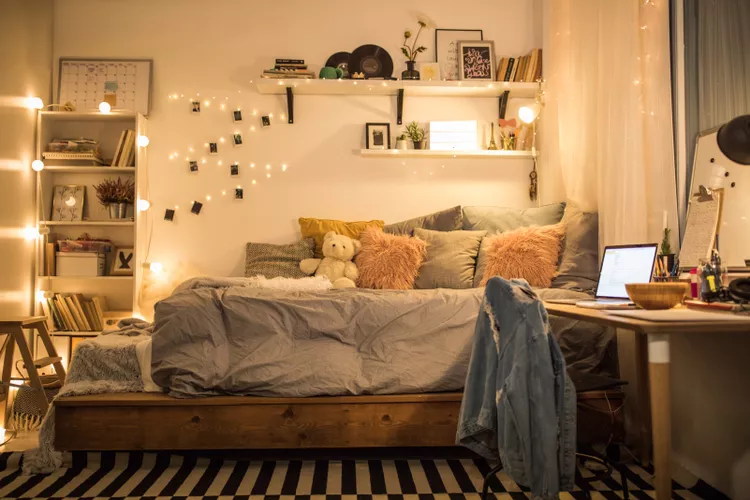
Most dorm rooms come equipped with overhead lighting and a desk lamp, but doesn’t create a warm, inviting space. Instead, Erwin Rosenthal suggests incorporating more lighting and placing lamps around the room with intention.
“A soft, layered lighting plan actually helps define zones and makes the space feel more open and cozy at the same time,” she says. “Having zones for sleep, study, and relaxing makes it feel more organized and intentional.”
Make the Most of Mirrors
Wall art like photos and posters are understandably common in dorm rooms, but you should never underestimate the power of a great mirror.
“They bounce light and create the illusion of depth, which can trick the brain into feeling like a space is more expansive,” Yokota says.
Mirrors, instead of a clashing array of wall decor, can also help your mind process a calmer space.
Design Vertically
In terms of maximizing function, Erwin Rosenthal confirms the best thing you can do is think vertically.
“Over-the-bed shelving, command hooks, and hanging organizers on closet doors or wardrobes are lifesavers,” she says. “Beds with built-in storage or lofted beds with a desk underneath maximize every inch.”
In this same line of thinking, she also suggests collapsible, stackable items like nesting bins and foldaway stools that can be tucked away when not in use.