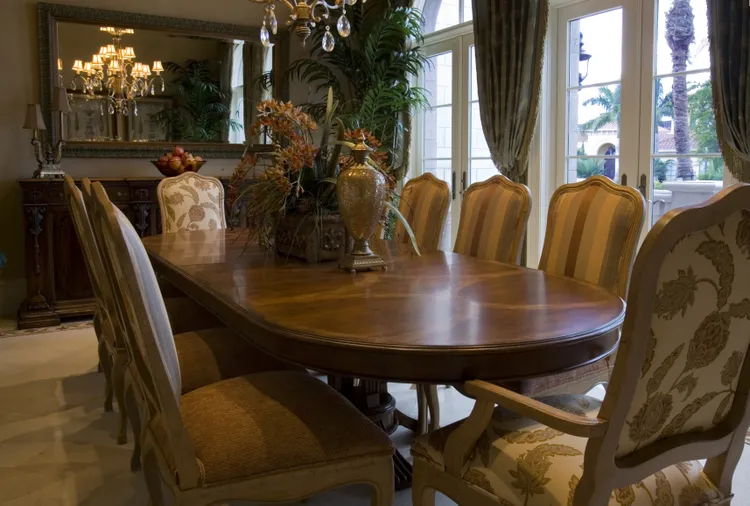
The wrong furniture, layout, and decor choices can make your dining room feel smaller than it is. We asked a designer to identify the main reasons that your dining room looks cramped, with advice on how to create an airy and inviting space.
Oversized Furniture

Resist the urge to squeeze in the largest table you can fit to preserve flow and functionality.
“If the furniture is too big for the room, it swallows the space whole,” says interior designer Tavia Forbes. “Pick a table that fits the scale of your room and choose slimmer chairs or benches that tuck in neatly.”
Pro tip: Leave at least 36 inches of clearance around the table to allow people to move in and out comfortably.
Heavy Window Treatments

Be wary of installing heavy drapes in fabrics like velvet or dense silk satin, which can overpower a formal dining room.
“Thick drapes might look dramatic in a castle, but in most dining rooms they just eat the light and leave everything feeling heavy,” Forbes says. “Guests want to feel comfortable, not like they’re trapped in a velvet cave.”
Pro tip: Choose lighter fabrics such as linen or cotton, or install Roman shades to frame the window without blocking natural light.
Too Many Dark Finishes
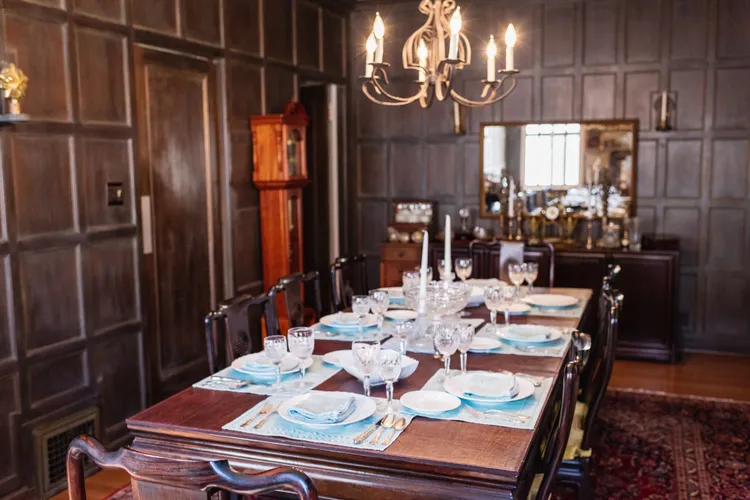
“Moody walls can be gorgeous, but when the table, chairs, and walls are all dark, it’s giving cave vibes—and not in a chic way,” Forbes says.
She recommends balancing darker walls with a pale rug under the table.
Pro tip: Ensure that the area rug extends at least 24 inches beyond the edge of the table on all sides, so chairs can slide back without catching.
Visual Clutter

Think twice before over-styling an off-duty dining table, Forbes cautions.
“I know it’s tempting to cover the table in candles, vases, and knickknacks, but too much stuff screams chaos,” she says. “Guests should be admiring your cooking, not navigating around your centerpiece obstacle course.”
Pro tip: Add visual interest with a single striking focal point. “A floral arrangement or sculptural bowl makes a bigger impact than ten little trinkets,” Forbes suggests.
Low or Heavy Light Fixtures
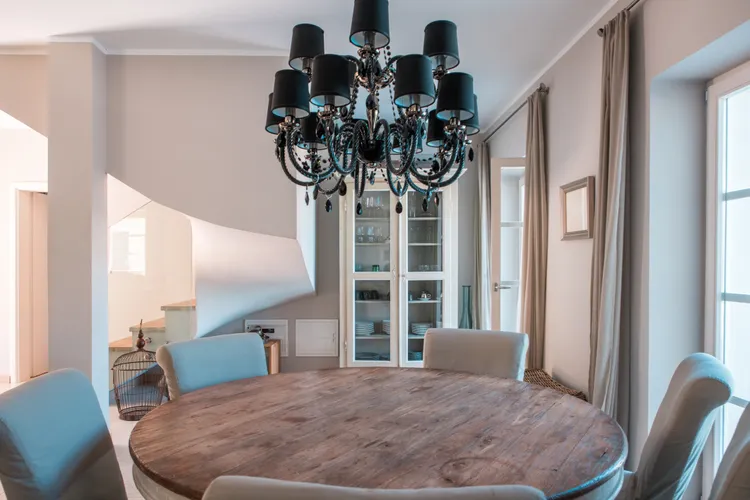
“Nothing kills the vibe faster than a chandelier that feels like it’s about to fall in your soup,” Forbes says. “Heavy or oversized lighting pulls the room down and makes it feel smaller.”
Pro tip: Hang a chandelier or pendant 30 to 36 inches above the table surface to create the right balance—close enough to feel intimate, high enough so no one’s bumping their head.
Too Many Contrasting Patterns
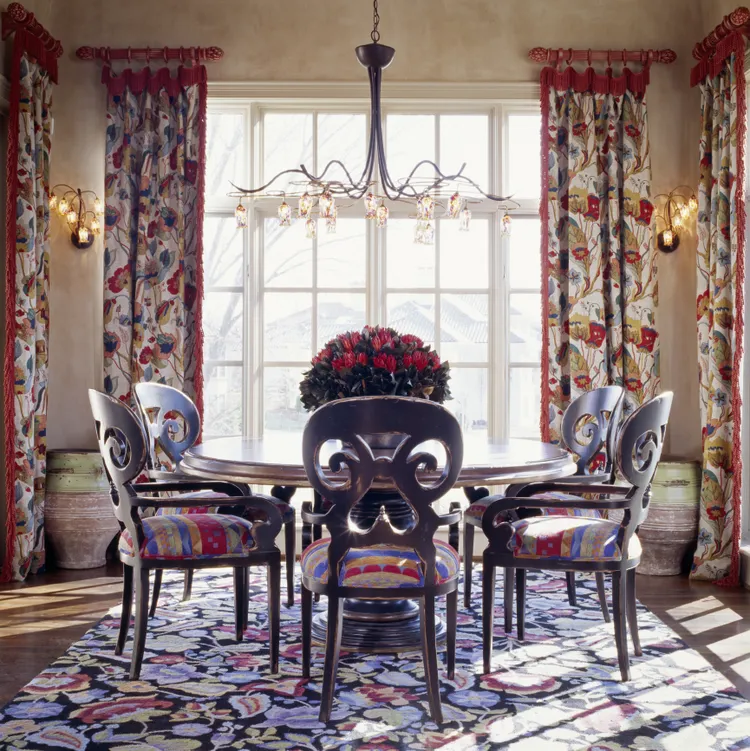
Decorating your dining room with patterned textiles can elevate the space, but beware of haphazardly mixing mismatched fabrics.
“Pattern mixing is fun until it feels like the wallpaper, rug, and upholstery are all yelling at each other,” Forbes notes. “Instead of style, you just get noise—and the room feels visually cluttered.”
Pro tip: Pick one statement pattern and leave the others to play backup. Keeping the palette cohesive gives the eye somewhere to rest.
Furniture Hugging the Walls

Many people have the mistaken idea that lining your walls with furniture rather than floating pieces will create the perception of a larger space.
“Pushing everything to the walls doesn’t make the room feel bigger,” Forbes says. “It just boxes you in, like you’re playing a bad round of furniture Tetris. Space feels larger when there’s some breathing room.”
Pro tip: Don’t allow your dining room to become a repository for random furniture by editing down what you don’t actually use. “A dining room only needs the essentials—a table, chairs, and maybe a sideboard—not every extra piece you own,” Forbes advises.