
Hanging wallpaper is a simple way to energize any room.
“Wallpaper works like instant architecture,” says interior designer Lauren Saab. “Designers love wallpaper because it turns even the simplest layout into something layered and personal without needing a full remodel.”
We asked the designer to share the best places to use wallpaper to add movement, color, texture, pattern, and an instant style boost to your home.
Ceiling Wallpaper
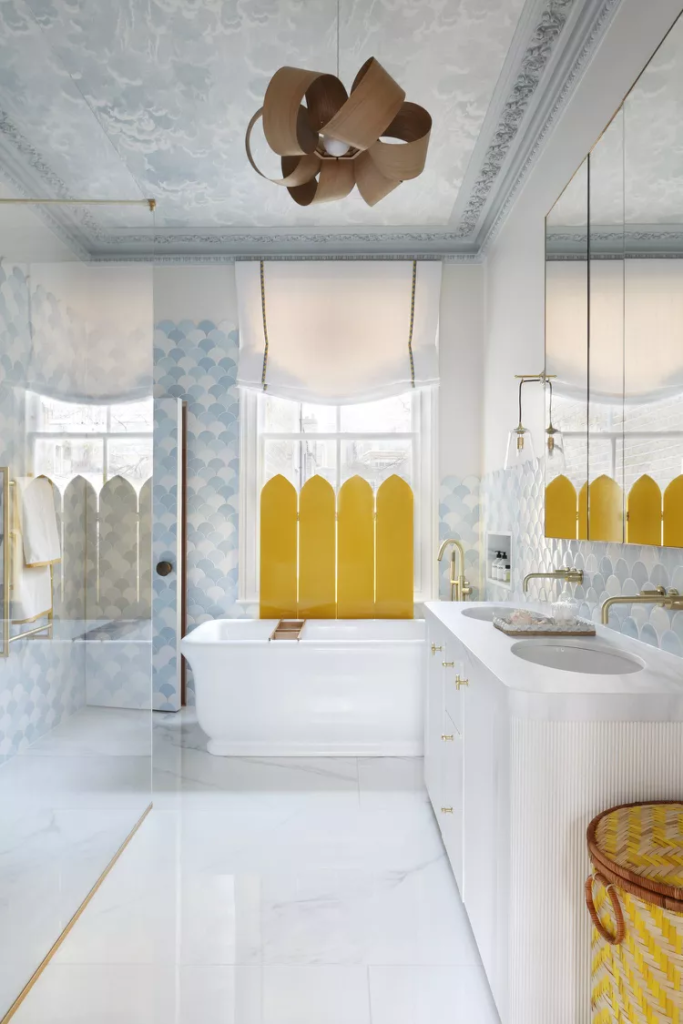
Give your room’s fifth wall a lift with ceiling wallpaper for a more surprising take on the accent wall. This unexpected flourish can work anywhere from a child’s room to a bathroom, dining room, home office, and beyond.
“A patterned ceiling in a bedroom or living room acts like a quiet canopy that brings the whole space into harmony,” Saab says. “It softens overhead light, adds a gentle sense of enclosure, and gives the room a beautifully finished feel without crowding the walls.”
Wallpaper-Backed Shelving
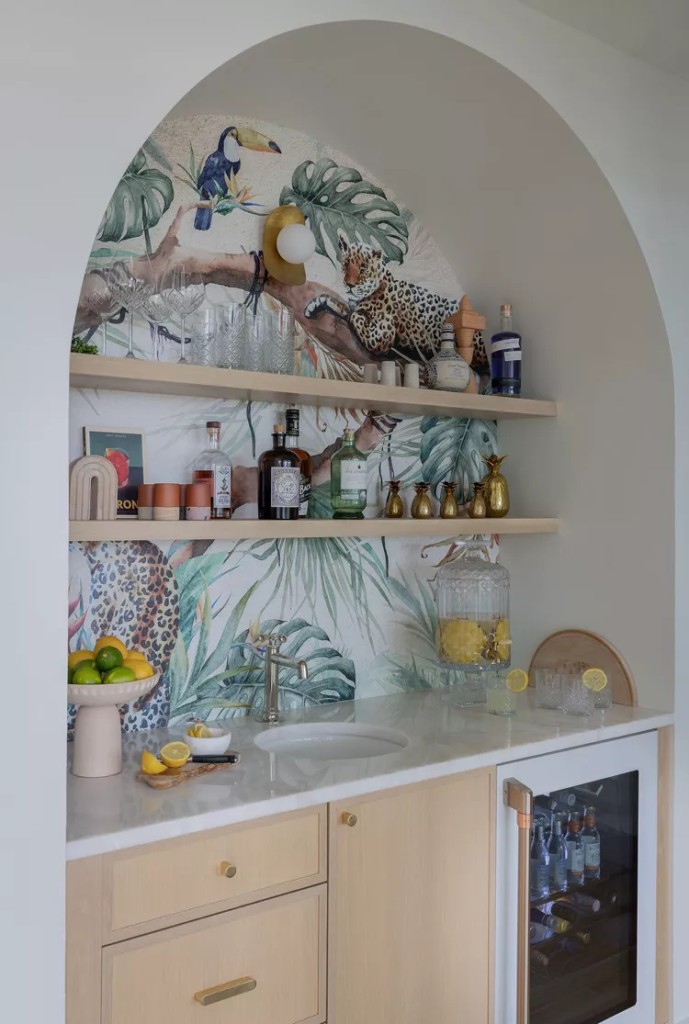
Add dimension and character to a wall of built-ins or a niche with open shelving by backing them with wallpaper.
Rather than compete with the objects on the shelves, it will provide a backdrop that lends everyday objects a level of drama they would otherwise lack, Saab says.
“The addition of a wallpaper to the back side of shelves will create the illusion of custom millwork,” the designer notes. “It also adds a subtle layer of depth that makes the entire room feel more considered and thoughtfully composed.”
Framed Panels
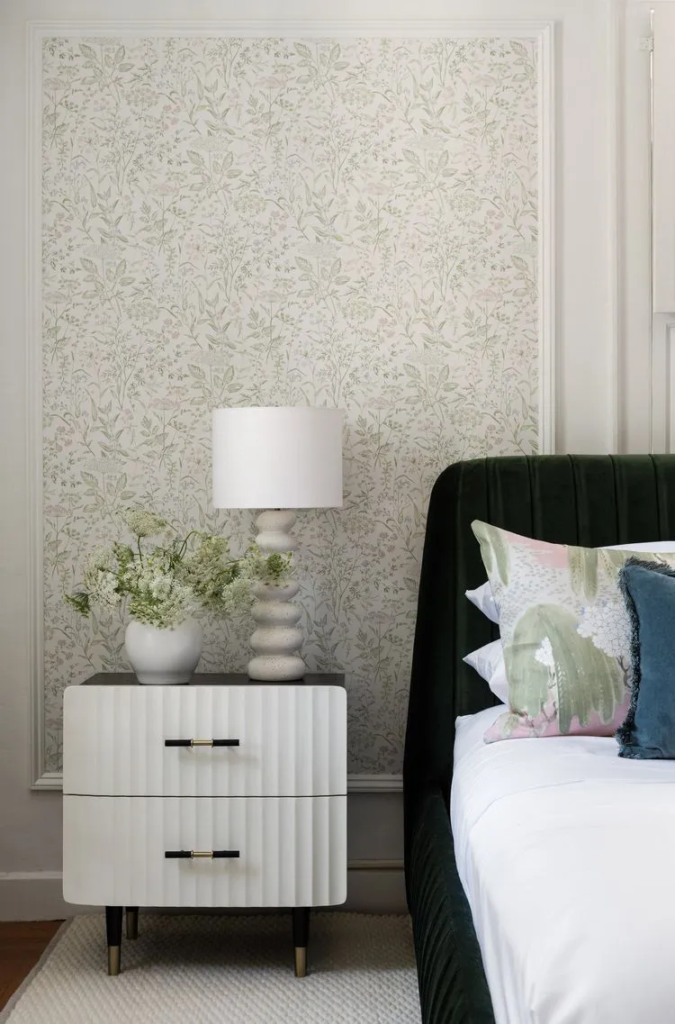
Rather than wallpapering a single wall—or every wall—treat wallpaper as art by framing it. Use trim or molding to create the look of framed artwork or wallpaper between existing millwork for a custom feel.
“A framed wallpaper panel behind the bed turns a standard headboard wall into something custom and considered,” Saab suggests. “It works like a built-in art piece that adds height and presence without the visual overload of a full accent wall.”
Wallpapered Stair Risers
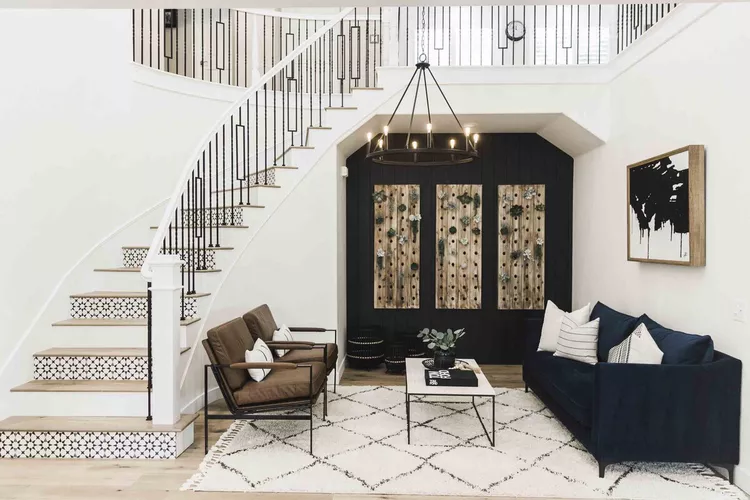
Create a statement staircase with wallpapered stair risers. This is a choice spot to utilize trompe l’oeil patterns that mimic traditional tilework or to add color and movement to a modern neutral staircase instead of a textile runner.
“Wallpaper on stair risers can be stunning when the colors connect to the rest of the home,” Saab says. “As long as the overall aesthetic appears deliberate and cohesive, wallpaper on risers will work well in either a bold or quiet motif.”
Because staircases are high-traffic areas that are prone to scuffing from shoes, the designer recommends using a thicker, wipeable wallpaper or a protective topcoat to keep the look fresh. If you are a renter, opt for removable peel-and-stick wallpaper.
Hallway Wallpaper
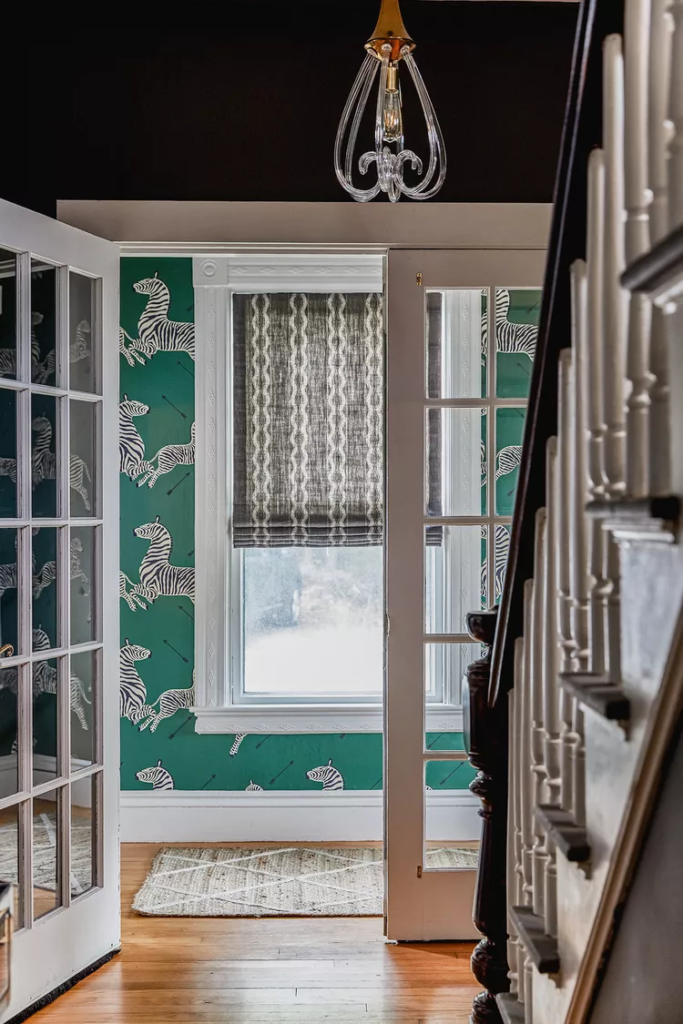
Use wallpaper to optimize the look of a forgotten space.
“Wallpaper turns a quick pass-through into a memorable design moment,” Saab explains. A bold print will give the walk from one room to another an intentional feel, and can be used to establish a visual rhythm throughout the entire house, she says.