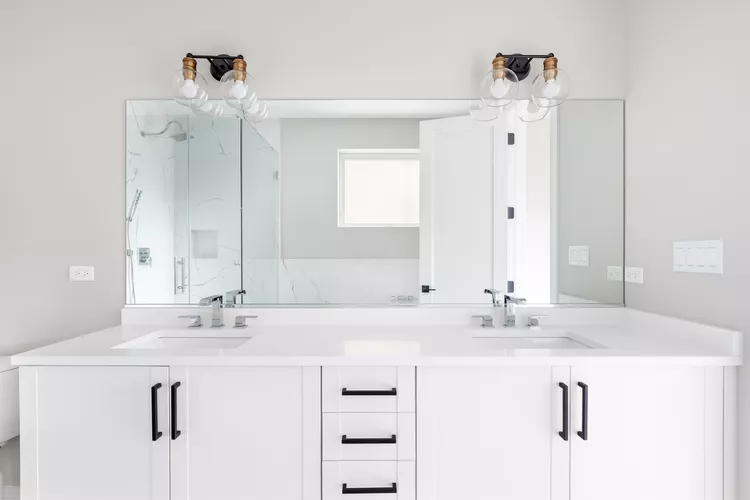
When it comes to designing a bright, breezy bathroom, there’s a fine line between crisp and clean versus stark and clinical. This is especially true if you’re starting from an all-white base without any warmth.
While it might be tempting to jump into a larger renovation, we checked in with a few design pros who assured us this isn’t always the answer. In fact, there are quite a few things you can do to help your all-white bathroom without swinging hammers.
But first, we wanted to find out why all-white bathrooms should be avoided in the first place.
White on White Is Too Stark
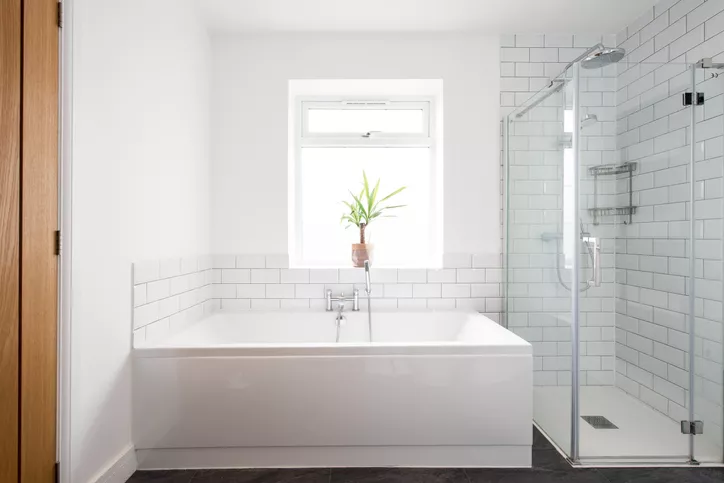
As interior designer Brittny Button points out, the main issue with an all-white bathroom is that the lack of any additional color is far too stark. She even goes so far as to call it a dead zone.
“It’s devoid of tonal color, lacks warmth or cool tones, and can therefore come off as bland,” says Button. “All-white is too clinical in feeling and procures lab-like settings.”
Instead, Button says to use spa decor as inspiration. Look to accessorize with creams, teaks, or cedar woods with warm tones that can create a more calming effect.
Lighting Can Be Tricky
As designer Julie Mays points out, lighting an all-white bathroom in an inviting way can be difficult.
“If your bathroom has a window, natural light can make all the difference,” she says. “But without that, all-white bathrooms can feel a bit sterile.”
If you’re dealing with an all-white bathroom that happens to be windowless, adding colors and textures should be top priority. Mays suggests swapping out the mirror and any sconces, and leaning toward warmer tones for your lightbulbs if possible
It’s Hard to Feel Peaceful
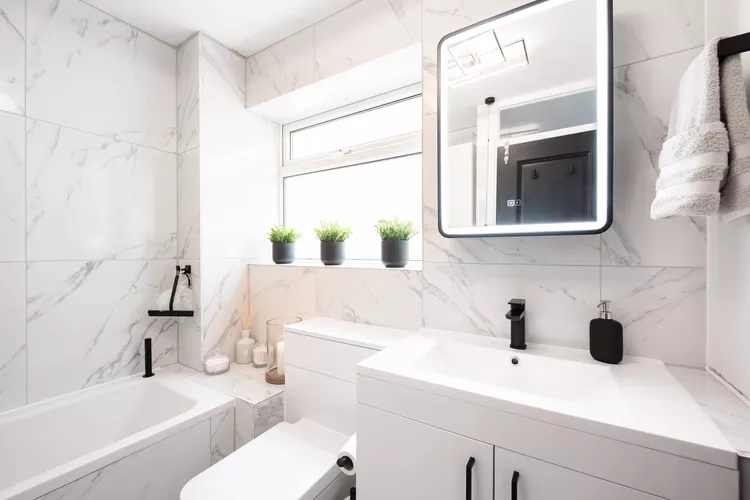
Interior designer Lauren Kyle says her biggest issue with an all-white bathroom is that she can never feel truly peaceful in such a plain space.
“Without much contrast, it’s hard to get that warm, peaceful vibe you want in a spa-like space,” she says.
Along with adding more color and texture, Kyle says she also likes to play with patterns in a crisp, white bathroom. Try adding fun towels, maybe some art, and get creative with your decorative accessories, too.
“A patterned rug can add a cozy feel,” she says.
There’s Not Enough Texture
Often in an all-white bathroom, there’s not enough texture. Smooth tiles and porcelain fixtures doesn’t do much to attract the eye to any one thing, so Button suggests turning to smaller items for more visual interest.
“Introducing texture with hardware pulls, towels, rugs, shower curtains, art, and home decor can elevate the space,” she says.
It Lacks Drama
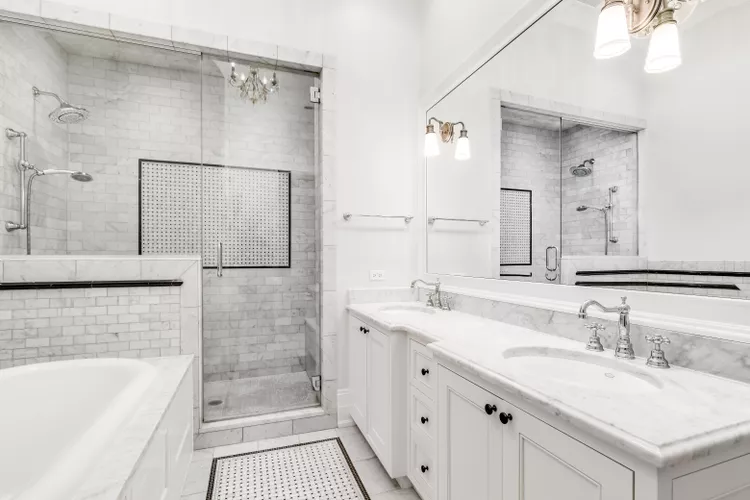
Another issue with an all-white bathroom is that there’s nothing very exciting to enjoy.
Obviously, swapping out your basic white tub or upgrading the tiles might be a big undertaking, but Button says this is an issue you can easily fix with a coat of paint and maybe a floor rug.
“Painting the walls and vanity different colors can have a dramatic effect,” she says. “Adding a rug to obscure white tile flooring helps too.”
You Have to Be Careful With Color
Another major downside of an all-white bathroom is that you have to be very careful about which colors you do add to the room. While warmer neutrals might allow for more room to play, Button says there are some shades that just won’t work in an all-white space.
“Avoid extremely bold saturated colors,” she says. “[No] royal purples, acrid yellows, or forest greens. They simply don’t work for white bathroom spaces.”
Mays agrees, and says startling or high-energy are a hard pass in an all-white bathroom. Think hot pinks, bright oranges, and electric yellows. These are difficult to pull off in any bathroom, but against a white background, they can feel even more stark.
“They don’t work in a space that’s meant to help you unwind,” says Mays. “Instead, pick tones that feel soft, soothing, and grounded.”