
Hallways are a tricky space. Because they exist to connect your rooms seamlessly and help create a natural flow through your home, you don’t need them to be too flashy, busy, or overly decorated. But at the same time, you also don’t want them to be bland and boring.
So, what to do if your all-white hallways are leaving you to feel uninspired? We chatted with a design pro to find out her dos and don’t when it comes to painting your halls and picking the right shade, style, and finish.
Non-Neutrals
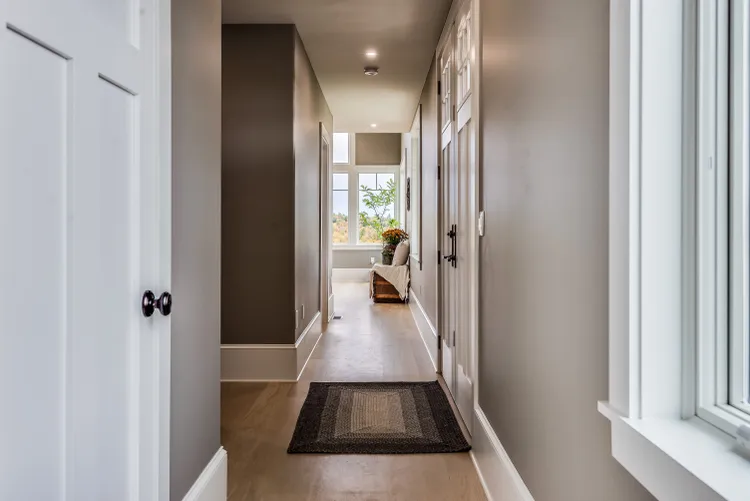
If you want one, blanket answer, designer Brittny Button says veering away from neutrals in your halls is usually a losing battle. Unfortunately, any other hue will rarely work well in the space due to the specific function of our hallways.
“It’s a shared space with adjacent rooms, so it has a universal use shared by many,” Button explains.
Designer Amanda Bell agrees.
“Choosing tones with a bit more subtlety or depth keeps the hallway inviting while still letting you express personality,” she says.
Instead of going bold, she suggests opting for a lighter tone that works well with low light and minimal to no natural light—a design snag most hallways have in common.
“The color you select will often be seen through shadow or lit by interior lighting,” Button says.
Unfortunately, this often means a bolder paint choice will look tacky instead of intentional.
Flat, Moody Hues
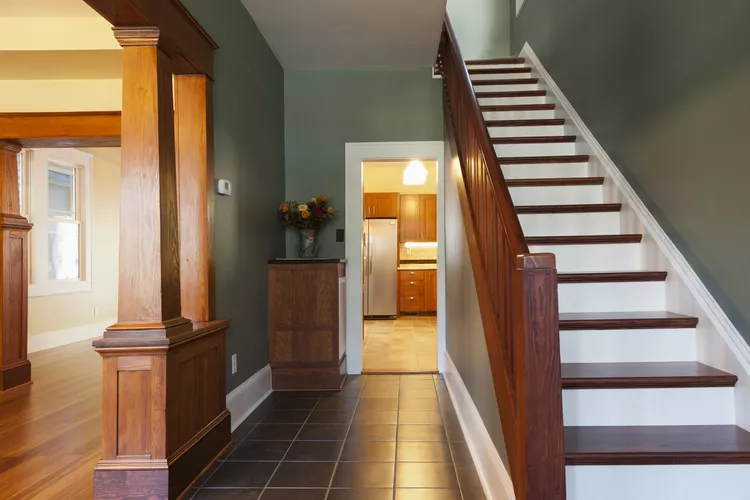
A dark, moody color is a big swing in a hallway, and should be avoided if your corridor is too small or cramped. But Button says if you have the space for it, you can give it a shot—you just need to avoid topping it off with a dull, flat paint finish.
“Consider the inclusion of elevated faux finishes like limewash or plaster as it adds textural depth to the spaces,” she says.
This also works well if you have other captivating architectural elements. Consider, for example, adding arched ceilings or doorways to create more height and elevate the space. Or, as Bell points out, you can also add better lighting.
“Lighting becomes especially important with darker palettes,” she says. “A well-placed pendant, wall sconces, or even a strategically positioned lamp can keep the space from feeling flat and help draw the eye forward.”
Same Shade as Ceilings
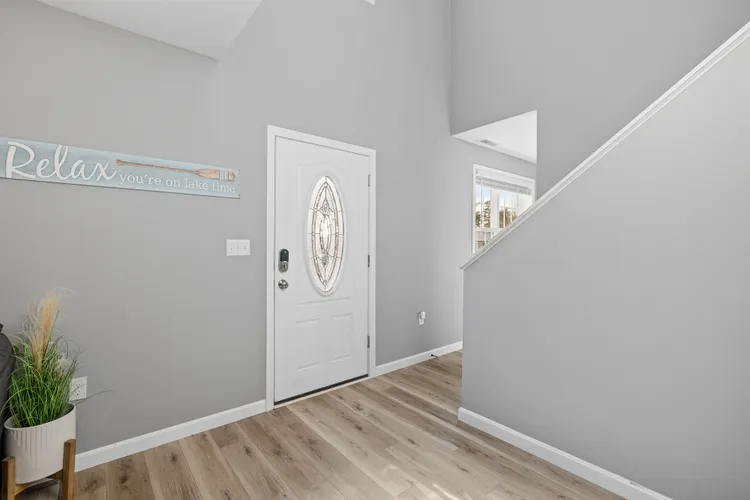
In a standard hallway, if you’re opting to use some color on the walls, Button says it’s not a great idea to paint your ceiling the same shade. The only exclusive here is if you’re keeping your hallway neutral in a light, warm, neutral shade.
“[Painted ceilings] will close in the space, making it feel smaller,” she says. “There’s real visual height that’s created when light paint colors are used on the ceiling. Plus, it’s timeless.”
Bold Colors
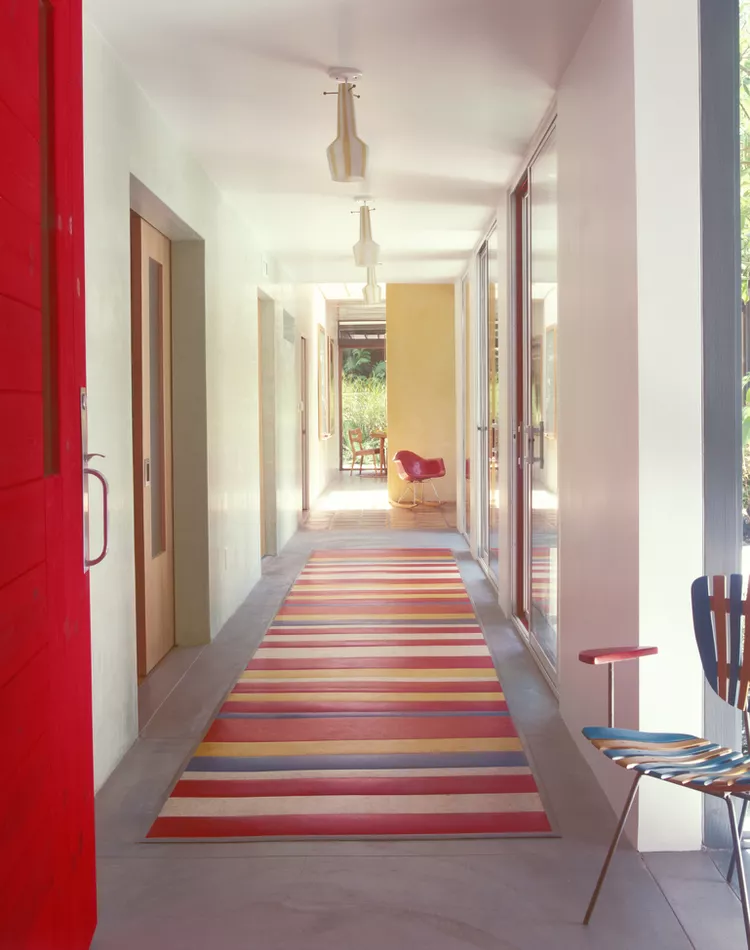
If you’re positive you’d love a bold-colored hallway, Button still has reservations—she suggests instead saving these choices for your powder room.
“The quirkiness can be contained, rather than being so overt,” she says.
But if you really want to go for a bright hall, Button suggests testing out your options first. Although, fair warning, she’s positive it’ll send your running for the neutrals again.
“Paint four or five poster boards in the bright color you think you like and attach these to the hallways for a few days,“ she says. “It can help to see how wrong a shade it is to live with.”
Neon Hues
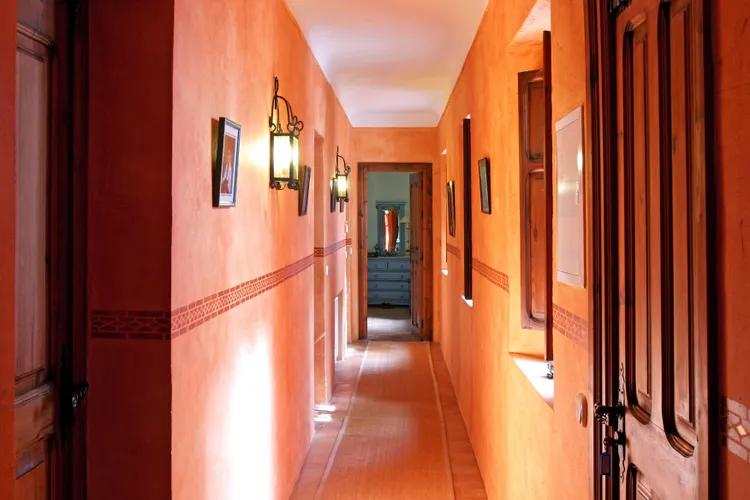
If bright red or bold orange are on your list, you might want to reconsider. It’s not that these aren’t great colors—it’s just that your hallway is meant to be a pass through area or a transitional space.
“[It’s] not a room where long periods of time are spent,” Button says. “[Choose something] soft and soothing to walk through day after day.”
Bell agrees.
“I generally suggest skipping colors that feel hyper-stimulating, especially in a narrow or heavily trafficked hallway,” she says. “Extremely vivid reds, neon greens, or highlighter yellows can dominate the space so much that they distract from the flow of the home.”