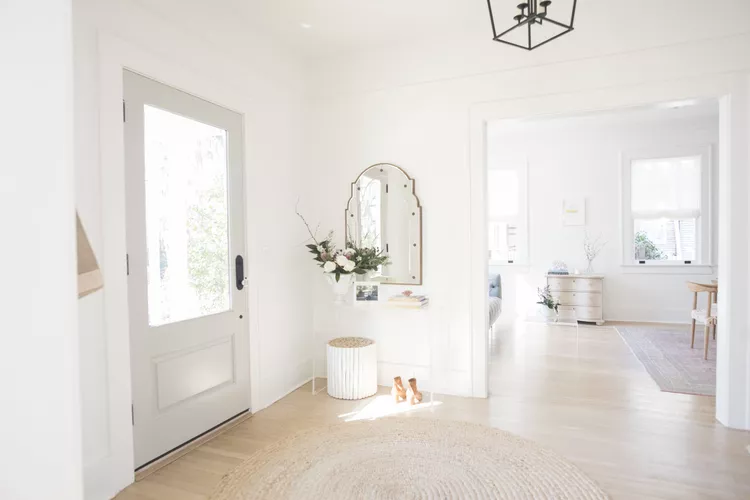
Be it a foyer or a vestibule, a formal entry is a dedicated room that welcomes you into a home. It’s a place for making a grand first impression for guests and setting the tone for the rest of your home.
But even if your home doesn’t have a formal entry, you can still achieve both of these goals by adding a few key elements to the area immediately surrounding your front door. We talked to three designers to find out how.
Start by Adding Textiles
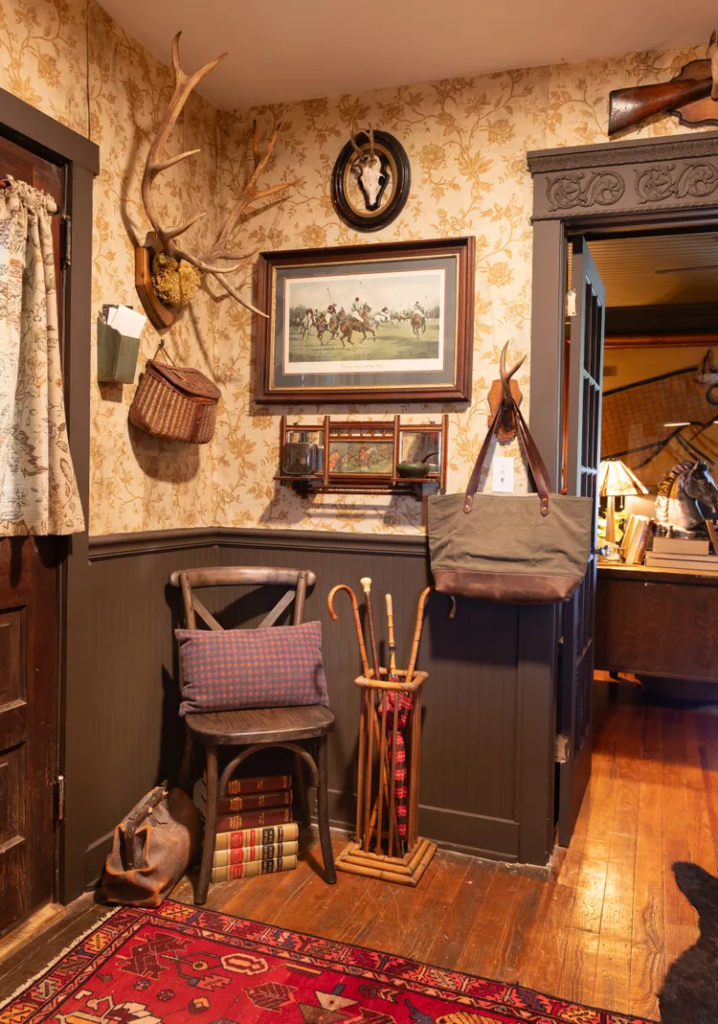
When decorating his own home, designer Justin Patterson was very intentional in adding lots of textiles to the area immediately surrounding his front door.
“A hand-woven rug on the floor, drapes that pull over your front door, and pillows on your seating area instantly soften the space and set a warm, welcoming tone,” he says.
Highlight Your Architectural Details
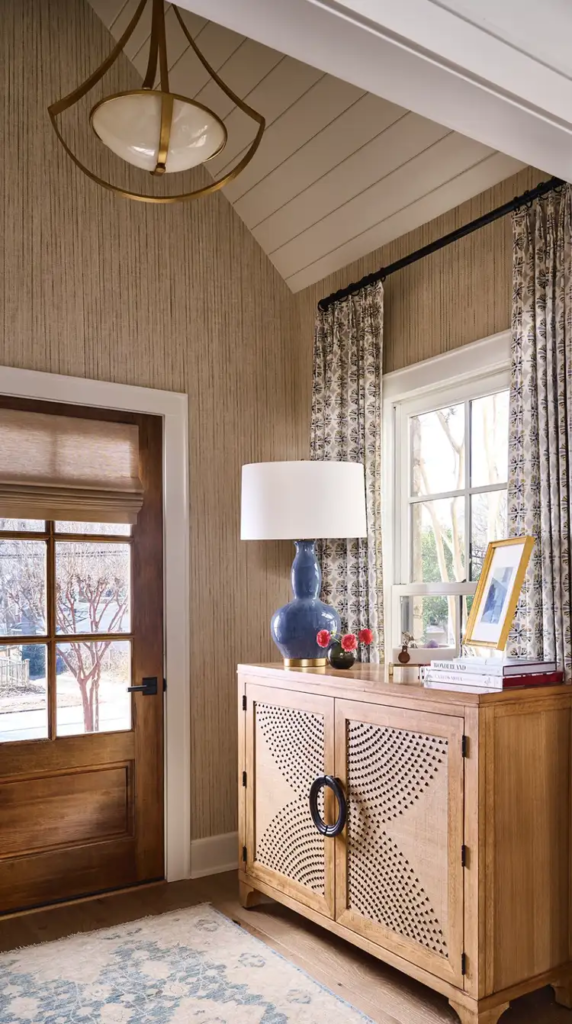
If your home has beautiful architectural details, your entrance is where you really want to flaunt them and make guests notice, according to designer Olivia Westbrooks. In one of her recent projects, she was designing the entrance of a home that boasted a beautiful vaulted ceiling.
“It was previously painted white, and so were the walls,” she says. “The vast height was lost, and it lacked character. The goal was to highlight the vaulted ceiling and bring back the character and charm of the space.”
To solve the dilemma, she added a nickel gap design to make the vault the focal point, along with a beautiful chandelier to draw the eye upward.
Or, Add Some Architectural Details
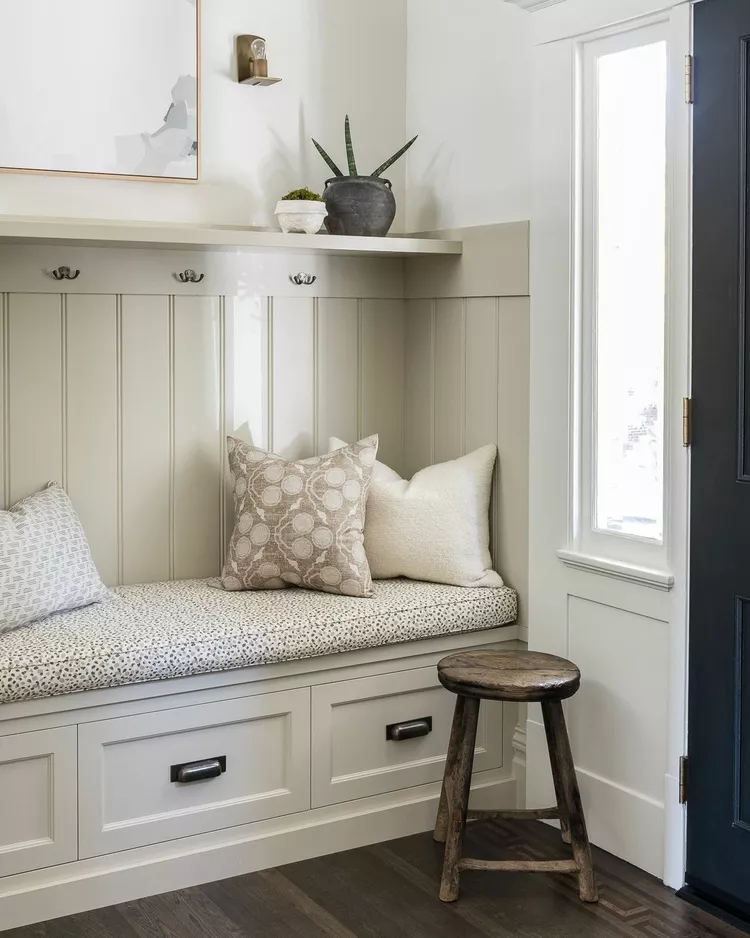
If you’re currently calling a new build home, it might not have any noteworthy architectural details to show off, like crown molding or paneling. But never fear, because as James Mellan-Matulewicz of Bobbi Beck points out, you can add your own.
“Full height options, such as simple shaker or vertical panels, can make even a modest entryway feel taller and more refined,” he says.
Or if you want to add in some additional texture, he suggests half-height paneling paired with wallpaper.
Don’t Forget a Drop Zone
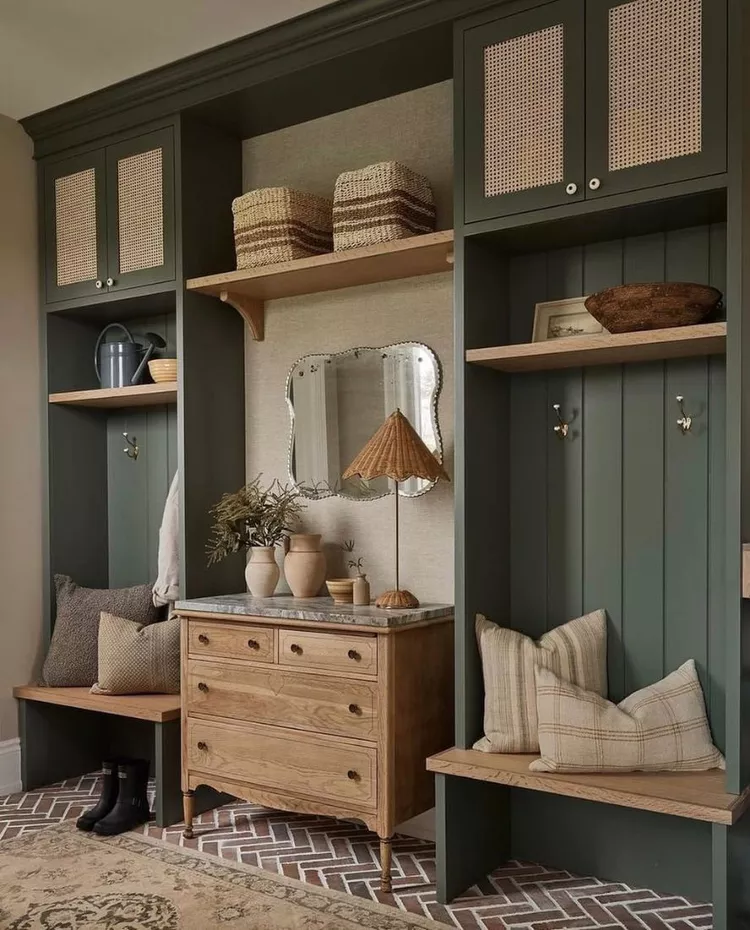
The area immediately surrounding your front door also needs to be a functional space, especially if this is the entrance your family uses daily. If you don’t have organizational systems in place for keys, bags, shoes, and coats, it will set the wrong kind of first impression for guests with clutter.
To achieve this, Westbrooks loves adding a chest of drawers that matches the home’s aesthetic right by the front door.
“[It] is an unexpected yet beautiful piece of furniture that serves as a drop zone for the family’s keys, provides additional storage, and is an immediate focal point in the entryway.”
Bring It All Together With a Statement Piece
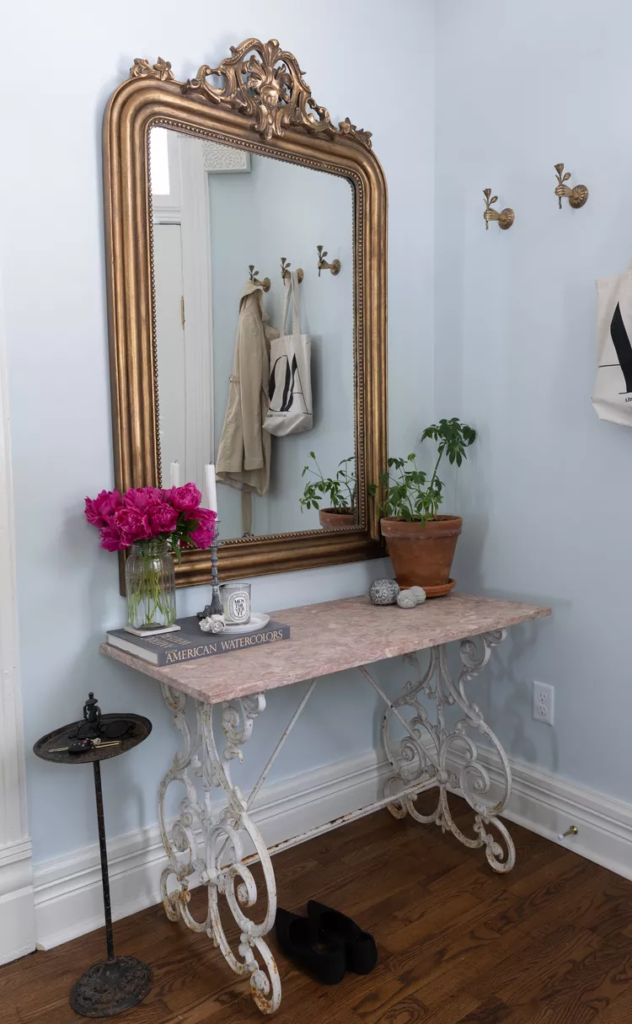
According to Patterson, the final thing an entryway needs to tie it all together is a statement piece.
“An armoire, an artful console table, or antique mirror will give the eye a clear focal point and bring it in to the rest of your home,” he says. “This defining piece introduces your design personality from the first step inside.”
Strategically place your statement piece in a place where guests will immediately see it when they walk through your door. If you don’t have a formal entry, this may be on or against the wall opposite the direction that your door swings as it opens.