If your dining room isn’t living up to its full potential, it’s time to focus on making it appear a bit more luxe. It’s easy to incorporate the following six design tips from the pros and make over your space so that it looks more elevated and better suits your style.
Add Millwork
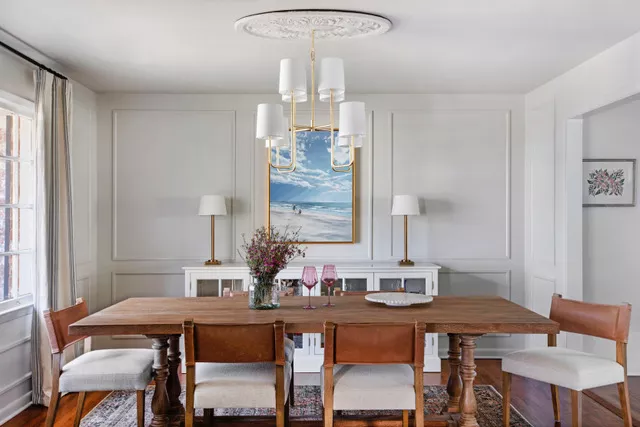
If your dining room doesn’t already contain architectural interest, don’t worry—it isn’t too late to add some major flair. Millwork is an excellent way to bring character into any dining space.
“If someone is handy enough, they could tackle it over a weekend,” Wendy Mauro, the founder of Wendy Mauro Design, says. That said, don’t be afraid to outsource this task to a professional if you’re not skilled in the DIY arena.
Once your molding is up, paint your entire dining space one color, even if you just select a simple white. Mauro explains how it’ll instantly elevate the space by making it feel dramatic and intimate.
Upgrade Your Lighting
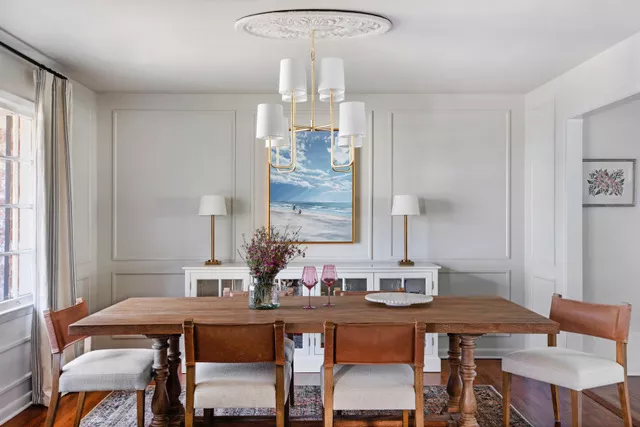
Say goodbye to impersonal, builder-grade fixtures, and bring in some lighting that truly amplifies your space.
“A unique lighting fixture over a table in a sculptural shape is the easiest way to create drama,” Rebecca Plumb, the founder of Studio Plumb, says. “Often called the ‘jewelry of the room,’ the right light fixture can add mood, sparkle, texture, color, and movement to make the space feel special.'”
Additionally, be mindful that your light fixture is big enough for your dining space.
Jennifer McKissick, the founder of Jennifer McKissick Interior Design, warns against the mistake of choosing a small and inexpensive light fixture since it’s the quickest way to make a room look cheap.
“In a dining room especially, the light fixture tends to be a focal point, so it’s wise to invest your money here,” McKissick says.
McKissick advises purchasing a chandelier with a diameter that is 1/3 of your dining table length—so if your table is 90 inches long, the diameter of your fixture should be 30 inches.
Paper Your Walls
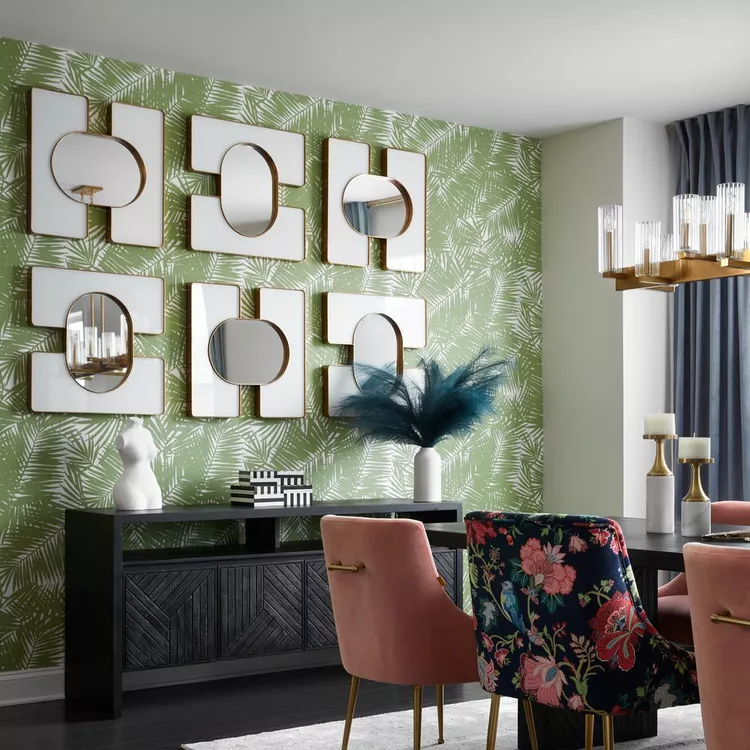
If you don’t wish to go the paint route, note that the right wallpaper will add major oomph to your dining room.
“A great way to add color and pattern, wallpaper creates a feeling of containment and invites people to linger and enjoy their time with each other,” Plumb says.
Keep in mind that even if you’re a renter, you can still get in on the fun. There are many beautiful peel-and-stick wallpapers on the market these days, which come in at a range of price points and are available in a wide variety of styles.
Why not go a bit glam?
“Using a metallic wallpaper on the ceiling gives a shimmering jewel-box effect when the light from the chandelier hits it,” Laurie DiGiacomo, the founder of Laurie DiGiacomo Interiors, says
If you can’t decide between wallpaper and millwork, why not combine the two? In this space, the combination looks extremely elevated and eye-catching.
Incorporate Vintage Pieces
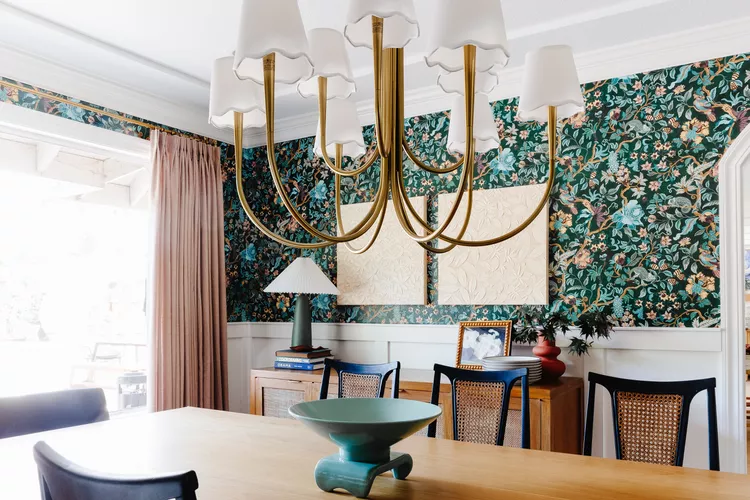
Vintage, antique, or heirloom pieces will instantly elevate your dining room if styled appropriately.
“There is nothing like the quality, and when executed correctly, it instantly elevates your space,” McKissick says.
If a secondhand piece has great bones but isn’t quite your style, don’t be afraid to alter it to better suit your home. For example, paint or new fabric can instantly bring a dated piece back to life, McKissick explains.
“It’s always the push-pull of old/new and modern/traditional that makes a space look expensive and unique,” McKissick says.
And don’t worry about incorporating a matching dining set. DiGiacomo recommends using various accent chairs at the head of the table to create an interesting and layered look.
Go Big With Your Art
No dining space is complete without some artwork, but instead of going all in with a gallery wall, think big. DiGiacomo suggests using oversized artwork as the only wall decor to create a dramatic and luxe statement which will help the dining room look more expensive.
Style a Centerpiece
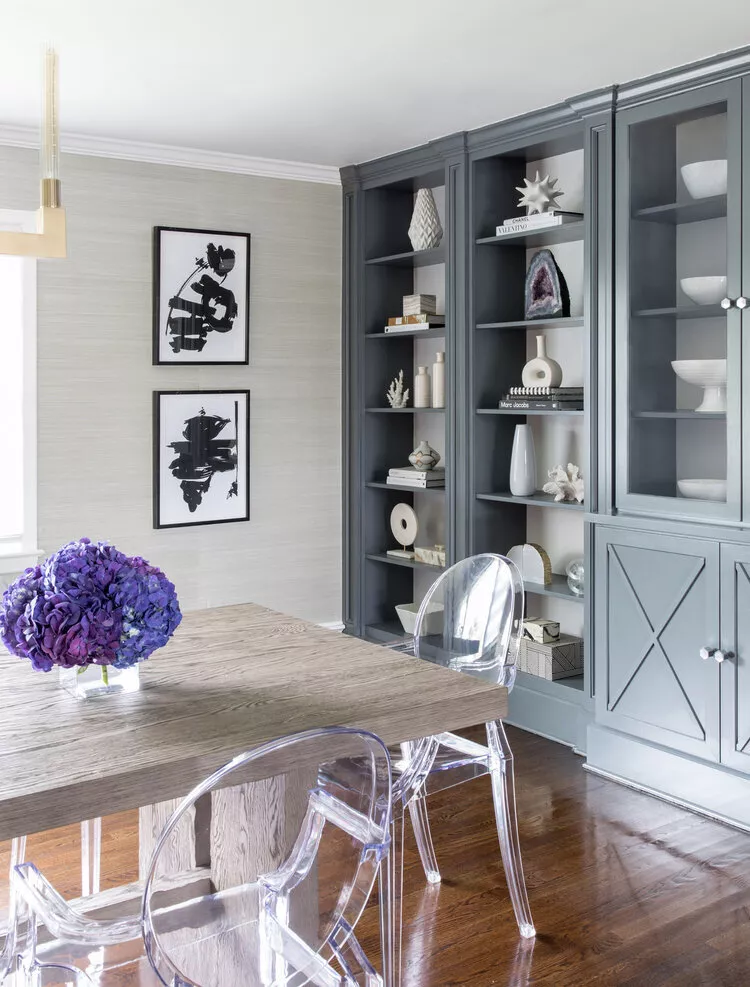
To ensure that your dining table looks welcoming and complete, add a centerpiece.
“I love using orchids in a decorative bowl for a punch of color and greenery that helps brighten any space,” Leah Walder, the founder of Leah Walder Interiors, says.