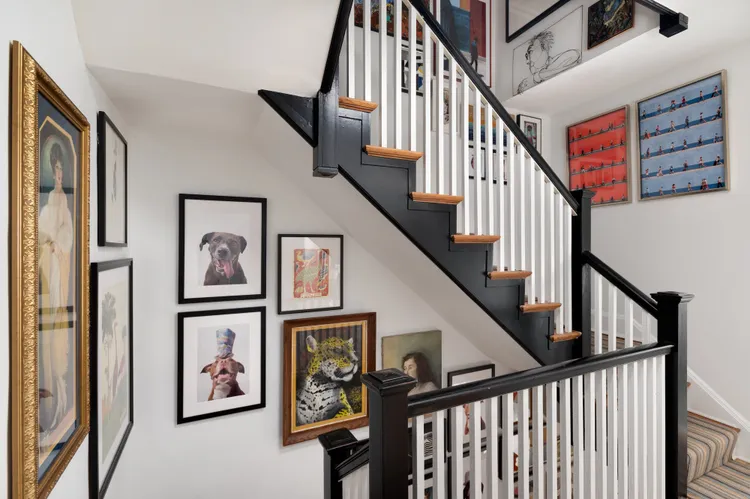
Hallways often become a no-man’s land. They get a quick coat of neutral paint, maybe a family photo or two, and then we call it a day. But think about all the square footage that’s lost when you give the hallway the bare minimum treatment!
This is usable space that you walk through countless times a day. How much more enjoyable would it be if you turned it into a functional or, at the very least, beautiful space?
To get a few ideas about how to better utilize a hallway as a cohesive part of the home rather than a pass-through, we talked to two designers with a reputation for making the most of their clients’ halls.
Here are the best ways to make your hallways feel like a destination rather than an afterthought.
Create a Whimsical Hideaway
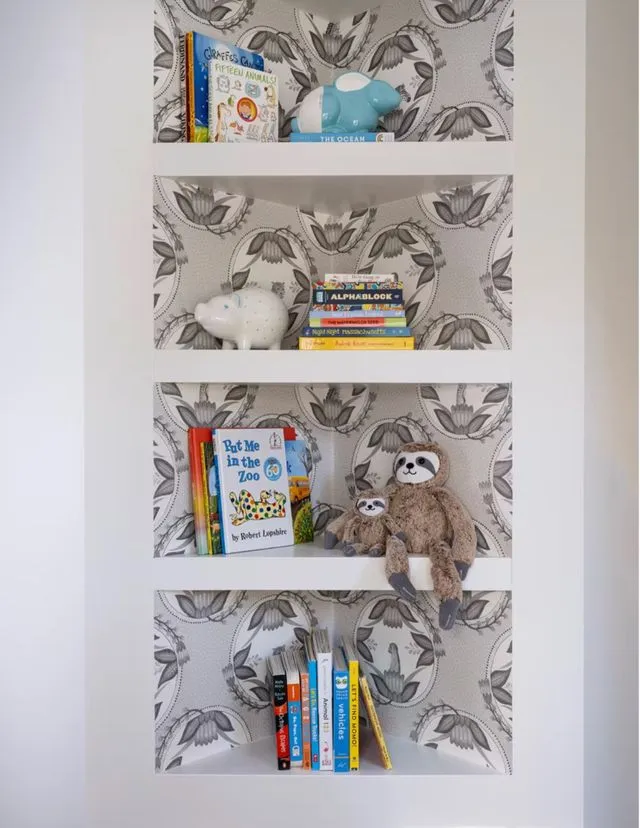
If you have the luxury of a hallway that has a footprint that could function as a small room, take advantage of it!
Turn it into a whimsical place for reading and playing. Because it’s in a hallway rather than a traditional room, this area feels like a hideaway—even when it’s in plain sight.
You don’t necessarily have to add furniture—that could impede the flow through the hallway—but adding decor will make it feel more like an intentionally utilized space rather than somewhere you simply walk through from point A to point B.
“This hallway had an awkward window seat with no purpose, and the family has two toddlers,” says Kimberly Tosi, principal at Gather Home. “We added a fun wallpaper, a bright cushion, and shelves to a niche for books and toys. Now it’s a play space, reading nook for the kids between their rooms.”
Carve Out a Drop Zone
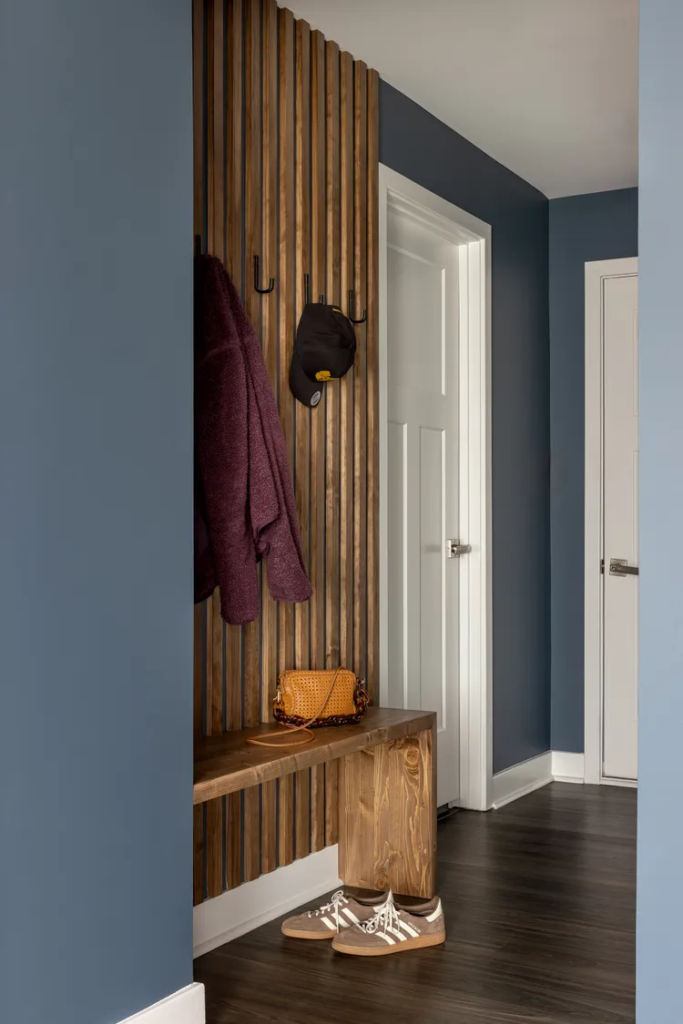
If you don’t have a mudroom, then a hallway could be prime real estate for creating a drop zone for shoes, bags, and all those random items waiting to find their way home.
Emilie Schiller, owner and founder of Home Methods, always looks to give hallways a purpose, whether that’s practical or aesthetic.
“From a functional standpoint, if you need, say, a space to put on shoes or a place to store hats, a hallway can be a great place to do that,” she explains.
Schiller points out that because hooks don’t take up much room, you can utilize them for everything from bags to hats to coats.
Add in a slim bench or, if space is really tight, a flip-down seat, and you have an incredibly functional mudroom alternative that can be used as a drop zone for all your essentials.
Add a Gallery Wall
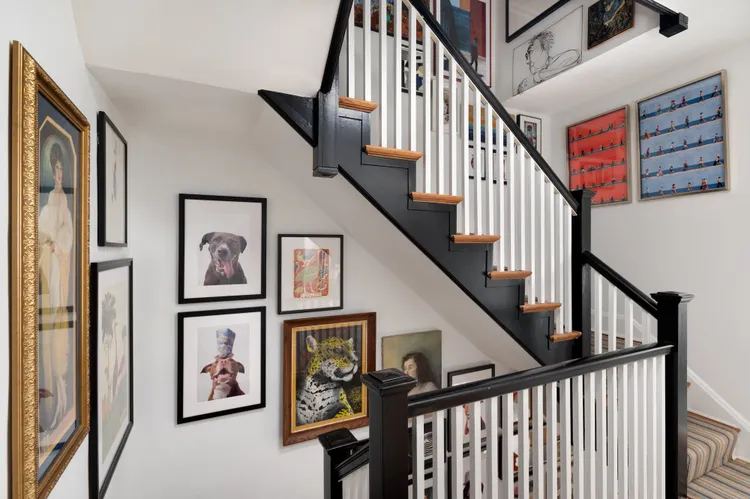
There are times when there simply isn’t room to add functional utility into a hallway. There’s no room for a reading nook or even a set of hooks, but you can still make the hallway feel like an intentionally decorated space while also giving a home to art and photographs that might otherwise pile up in a closet.
“One thing I love to do in hallways is a gallery wall. There is so much open wall space just begging to have art,” says Schiller.
Line the hallway with paintings, prints, and photographs that feel cohesive and in keeping with the color palette of the rooms that surround the hall. It’ll feel like a preview of what’s coming in the rest of the home rather than a blank, disjointed pass-through.
Tie It Together With Color and Pattern
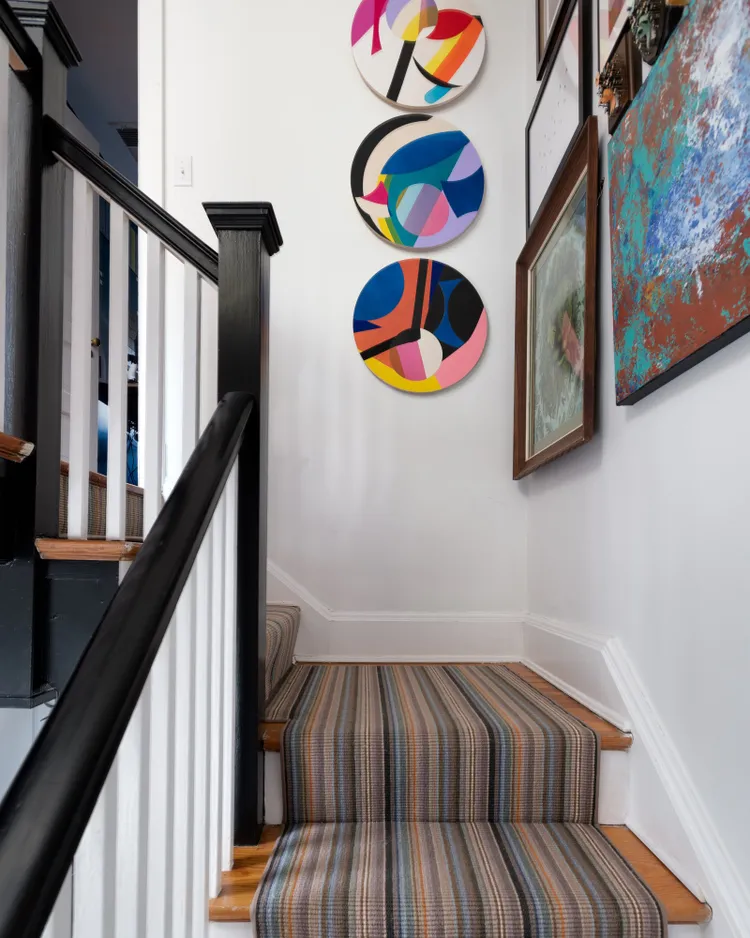
If you want to give a hallway presence, add beautiful flooring, a cozy runner, and wall color or art that makes a statement. Echo the rest of the home with the color and pattern.
If you love vibrant, saturated hues, don’t paint the hallway a neutral simply because that’s expected.
Don’t choose the beige runner just because that’s what everyone else does. Take a cue from your own personal style and make the hallway fit in with your overall design vibe.
“A hallway is also a great place to look at the surrounding rooms and choose a wall color and/or flooring that ties all the spaces together,” says Schiller. “By making the hallway intentional, it really brings a completed feel to the home.”