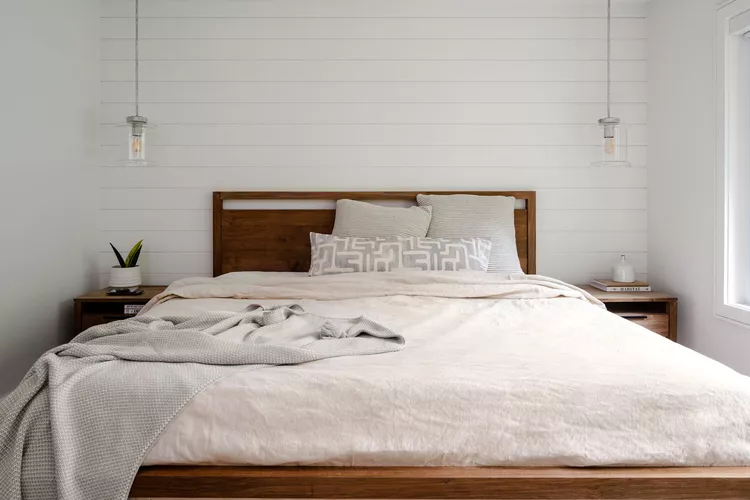
Small bedrooms can be challenging to style, but there’s no reason they can’t be as functional and beautiful as a larger space.
“A well-designed small bedroom feels intimate, cocoon-like, and calming,” says interior designer Lauren Saab. “Larger bedrooms often slip into chaos, while a smaller one done right becomes a sanctuary where nothing feels wasted and everything feels considered.”
We asked the designer for her best advice on how to make a small bedroom feel bigger.
Lighten Up the Bed
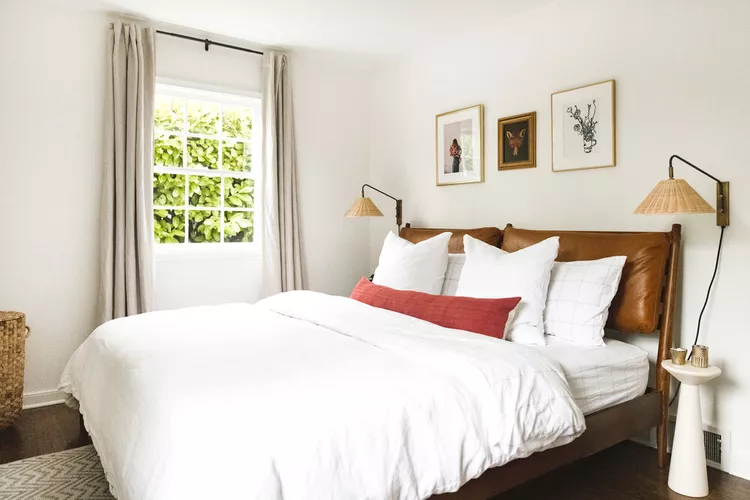
The bed is the largest piece of furniture in your room. Choose a bed frame that doesn’t dominate to keep a small bedroom feeling airy.
“Forget bulky platform beds and dust-ruffled frames,” Saab says. “Raising the bed on slimmer legs with open space beneath instantly doubles the visual floor area. That bit of negative space lets the room breathe and convinces the eye it’s bigger and lighter.”
Don’t Supersize the Mattress
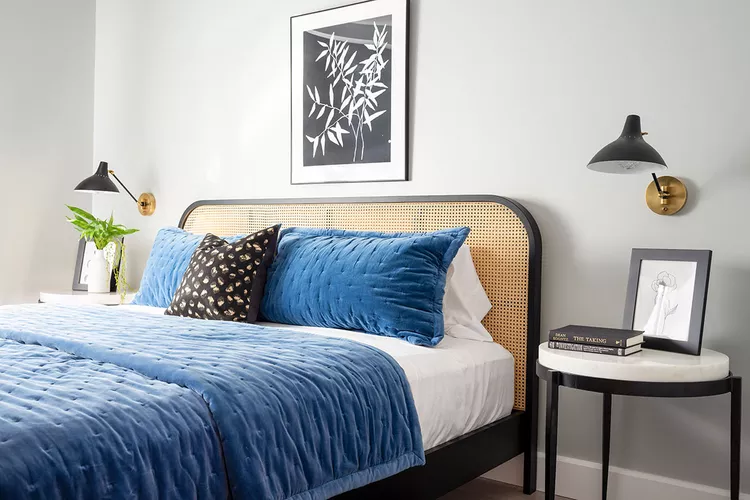
Your choice of mattress size can make or break the design and functionality of your bedroom.
“Choosing the largest mattress possible is a common mistake in small bedrooms,” Saab points out. “A king size may feel like a luxury, but if it eats the entire footprint, the room closes in. Scaling down to a queen or full can free up walking space and instantly make the bedroom feel bigger and less claustrophobic.”
Streamline Bedding
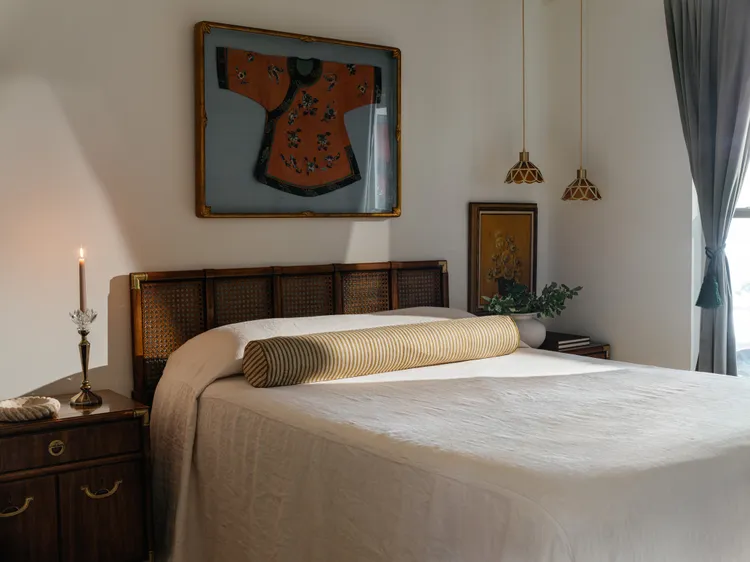
Take a minimalist approach with bedding to make a smaller space feel expansive.
“Overstuffing the bed with layers and pillows makes the whole room feel heavier,” Saab cautions. “Mountains of cushions and bulky duvets swallow square footage and turn the bed into a barricade instead of a retreat. Stick to crisp bedding with two or three well-chosen pillows so the bed feels open, inviting, and proportionate to the room.”
Float the Nightstands
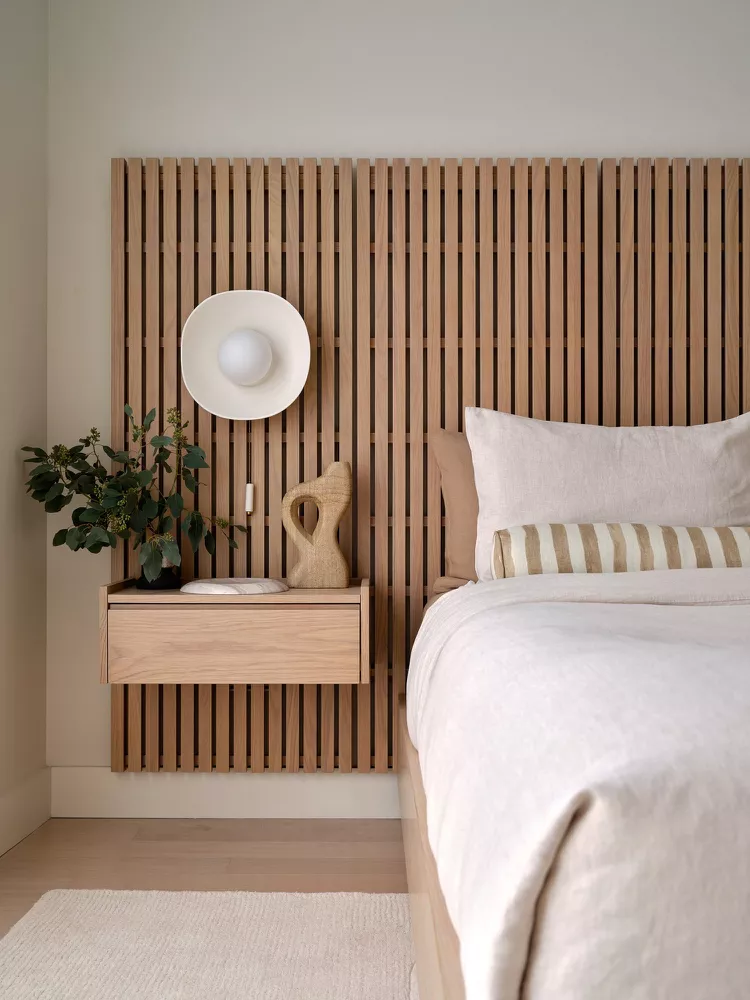
Create breathing room around the bed with floating nightstands, Saab suggests.
“Bulky nightstands drag a small bedroom down, while slim wall-mounted shelves keep the floor clear,” she says. “Even a few inches of visible flooring instantly makes the room feel bigger, brighter, and more open.”
Small Bedroom Styling Tips
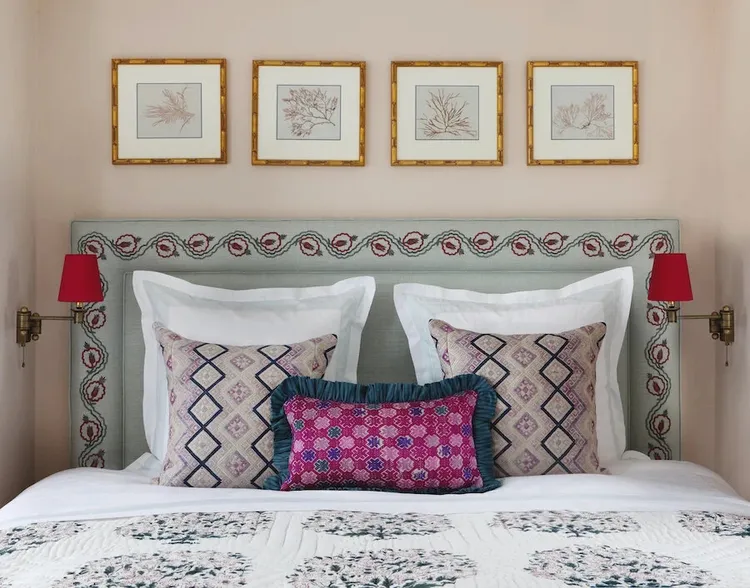
Saab offered some additional tips for styling a small bedroom:
- Mount or hang light fixtures. Instead of crowding the nightstands with table lamps, hang wall sconces or pendant lights to make the room feel lighter and more open.
- Maximize vertical storage. Use the full height of the walls with bookcases, cabinets, or a row of hooks to draw the eye upward.
- Hang a mirror facing the door entrance. “Catching that reflection right at the doorway stretches the entry and makes the whole room feel bigger from the start,” Saab says.
- Try a tonal color palette. Layer wall paint and textiles such as curtains, rugs, and bedding in similar tones to enlarge a smaller bedroom. “Tone-on-tone layering tricks the eye into reading the space as more generous than it really is,” Saab advises.
- Run curtains all the way to the ceiling.Hang bedroom curtains at ceiling height to make the room feel taller and draw the eye upward.
- Streamline wall art. One oversized piece of wall art has far more impact than a bunch of little frames, Saab notes. “The scale feels deliberate, polished, and expansive, while clusters of small pieces only add clutter and make the walls close in.”
- Choose lighter finishes. “Heavy matte colors soak up light instead of bouncing it around,” Saab explains. She suggests using lighter, softly reflective finishes that amplify natural light and push the walls outward.
- Edit your possessions. “Designing a small bedroom is less about shrinking your wish list and more about editing it with a curator’s eye,” Saab says. “Every piece has to earn its place.”