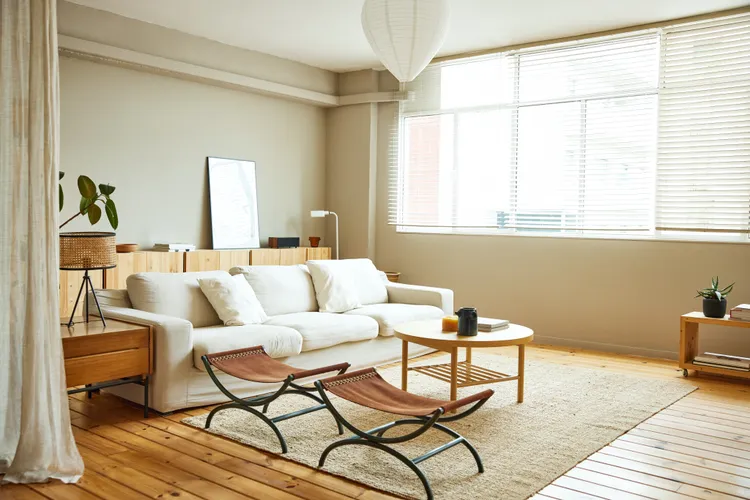
Large, sprawling living rooms can boost a room’s overall comfort level, making the space feel like a place to gather for events, family functions, and more. But even smaller living rooms can appear more spacious if designed or laid out correctly. The trick is simply knowing what to do.
We got top intel from interior designers who share everything you need to know—from rearranging furniture to make the room more open to keeping the walls and trim in the same color.
Open Clear Pathways
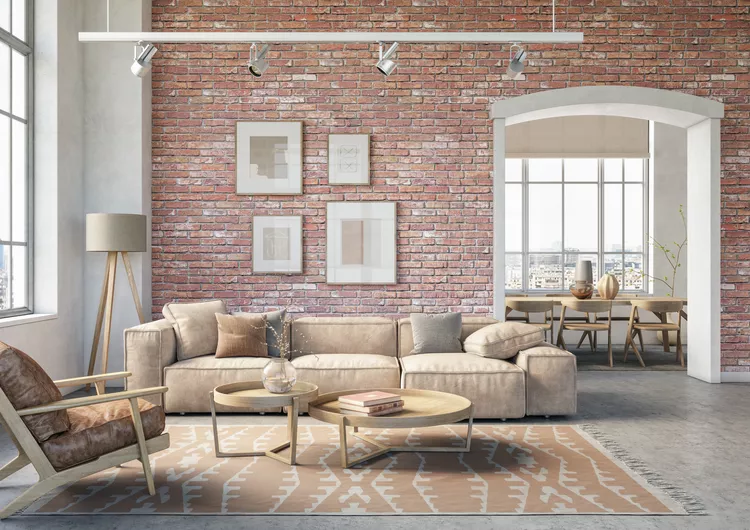
To make a living room feel more spacious, start by adjusting the layout so that the main walkways are open and free of obstacles.
“This often means moving a sofa or chair that sits directly in the path or removing smaller pieces that block movement,” says interior designer Samantha-Jane Agbontaen.
Place these pieces of furniture out of any walkway whenever possible to really open up a smaller living room space. When a living room layout supports a clear flow, the eye can move across the room without stopping, making the space feel bigger regardless of its actual size.
Increase the Amount of Light
A light and bright living room feels more open because the walls appear farther apart and the room takes on an airier atmosphere. Your guests will feel like the room is visually less heavy as well, giving the impression that the room is more spacious.
“Adding a floor lamp to a dim corner or raising the blinds during the day reduces shadows and lifts the room overall,” says Agbontaen.
Lighter window treatments and additional light sources help create a well-lit living room.
Float the Furniture
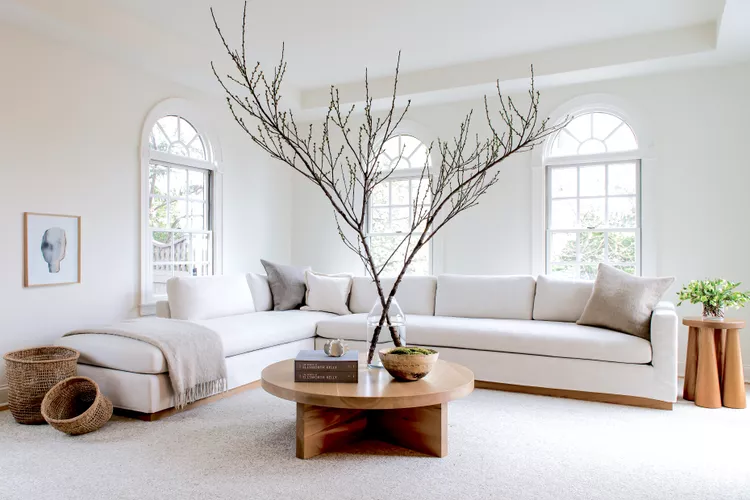
Ironically, pushing every piece of furniture to the walls makes a room feel tighter.
“Pull sofas and chairs six to twelve inches forward to create breathing space and clear sight lines,” says interior designer Maria Ramirez. “The negative space reads as more square footage.”
Focus on One Statement Piece
Having just one large piece of artwork—a show-stopping light fixture or an oversized sofa—makes the room feel intentional and calm. But if you have all this at once, the room can feel overloaded and therefore smaller.
“Dozens of small bits create visual chatter. One bold focal point equals clarity and a surprising sense of space,” says Ramirez.
Remove or Replace Bulky Furniture
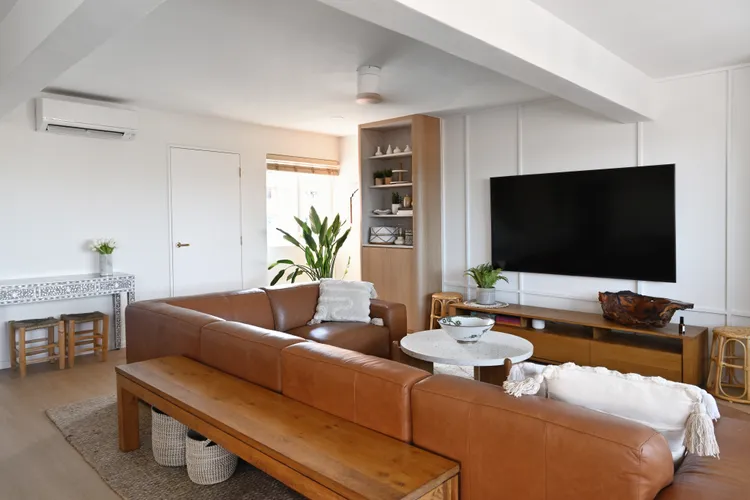
Take a look at the largest pieces in the living room and decide whether they overwhelm the space.
“Removing one oversized armchair or replacing a heavy coffee table with something slimmer can make an immediate impact,” Agbontaen says.
Older pieces of furniture tend to be on the bulkier side because the fashions then favored thicker wood legs on coffee tables and chairs. But knowing the rough measurements of a piece of furniture can help you also identify which ones should be relocated.
You may also want to inject some modern, slimmer pieces into your living room.
“Large pieces carry a lot of visual weight and when they are reduced, the room feels lighter, less crowded and noticeably more spacious,” Agbontaen adds.
Reduce Visual Clutter
Too many decorative items make a living room feel busy and smaller than it is.
“Simplifying accessories by clearing tabletops, reducing excess pillows, or removing small side tables can open the space,” Agbontaen says.
If you take out some of the clutter, or choose and place artwork carefully, it creates a space that brims with less visual noise.
“The room feels calmer and more expansive which helps it appear larger,” she says.
Drench Walls and Trim in One Color
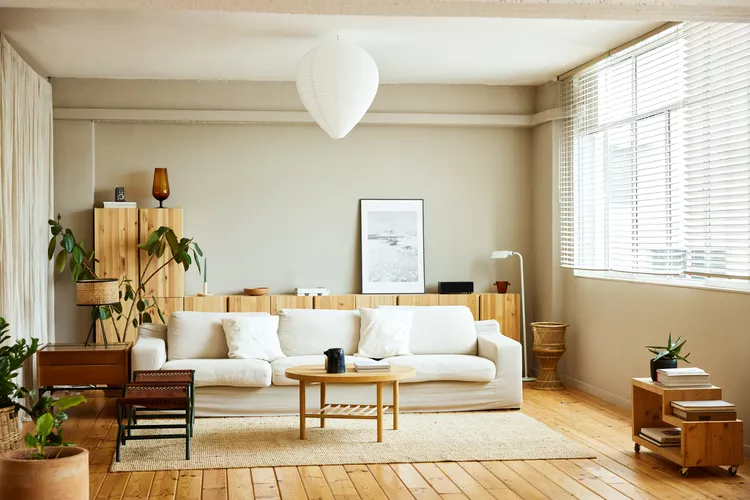
Having fewer visual breaks means the boundaries feel farther away and expands the room, if only visually. White trim against colored walls visually chops up the room into smaller segments.
“Use a single hue on walls, skirting and architraves, so the eye glides across the room,” Ramirez says.
Choose Leggy Furniture
Armchairs and credenzas on visible legs show more floor around them and that signals more space. Therefore, Ramirez recommends leaning into slimmer furniture profiles, less heavy frames, or a light rug to keep everything feeling lifted rather than heavy in the living room.