Kitchen design is all about blending form with function. A well-designed kitchen should be functional, easy to use, and beautiful. While it’s easy to get swept up in trendy layouts, sleek finishes, or statement features, certain design choices can make everyday cooking more difficult than it needs to be.
We asked two interior designers which design choices should be avoided to maximize functionality in the kitchen, as well as the small tweaks that can make your kitchen feel both beautiful and practical. According to the pros, here are five kitchen design choices that can actually make cooking harder.
Dishwasher Placement
When it comes to kitchen layout, it can be easy to overlook the importance of where the dishwasher is placed. Of course, things like the fridge and stove often come first.
But Brittny Button, founder and principal designer of Button Atelier, says that dishwasher placement matters more than you think. Without careful consideration, wonky dishwasher placement can lead to impractical design and frustration as you use your kitchen daily.
So, where’s the best place for your dishwasher? Button says it should be relatively close to the stove, fridge, and cupboards. Ideally, next to the sink so dishes can be transferred easily without needing to take more than one step.
“Too often, I see this off in no man’s land when it comes to kitchen design,” she says. “Placing it underneath an island adjacent to the sink is often your best bet!”
Positioning the Fridge and Stove Too Far Apart
According to Button, another common kitchen design pitfall is placing the fridge and stove too far apart from each other. The last thing you want is to be walking back and forth across the kitchen every time you need a new ingredient.
“Think of these as the core zones to work from,” Button says. “If they’re not in proximity of each other within 4 feet or so, it feels like a chore to cook. There’s an effortless effect that you want to foster with the design of work areas.”
Open Shelves by the Cooktop
By now, we’ve all heard a lot about the impracticality of open shelving in the kitchen. Generally, designers recommend using it sparingly for a decorative effect, rather than going all-in and replacing every upper cabinet in your kitchen.
However, interior designer Yvonne Harty advises that one place to always avoid open shelving is near the cooktop.
“Cooking creates grease and fine oil mist that clings to everything nearby, meaning shelves (and everything on them) need constant cleaning,” she says.
Instead, reserve open shelving for areas far away from your cooktop. If you’re aiming for an open feel around the stove, consider keeping the areas adjacent to the cooktop clear, or opt for glass-front cabinets to achieve a similar look with significantly less upkeep.
Oversized Islands
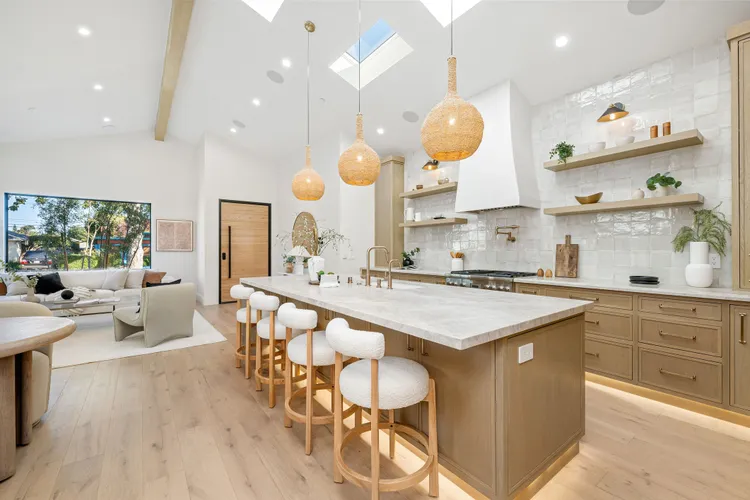
Large kitchen islands are a big trend for 2026, but Harty cautions against jumping aboard blindly. Done wrong, oversized islands can be more of a hindrance than a help, no matter how impressive they may look.
“Large islands without proper work zones create extra walking between tasks and make working in the kitchen less efficient,” Harty says.
For example, if the island is too deep, it can become difficult to reach the center, resulting in a dead zone of wasted space that is also difficult to clean. That’s not to say large islands are out, but designing an island to fit your lifestyle and your space is key.
“Design an island that supports the way you cook, with a prep sink, integrated trash pull-out, or designated seating area,” Harty says. “Zones matter more than size.”
Pendants Without Task Lighting
Too often, proper lighting is neglected in the kitchen. Eye-catching pendant lights and chandeliers can steal the show, while task lighting is left to the wayside.
But beautiful finishes can’t make up for poor lighting, Harty says. A stunning pendant above the island won’t be of much use if you can’t see what you’re doing when you’re prepping food on the counters.
In the kitchen, incorporating layered lighting is crucial. Yes, we love layered lighting for any room in the home, but in the kitchen, it’s especially important. You’re regularly handling sharp knives and hot materials, after all.
“Include recessed lighting for general illumination, add under-cabinet lighting for task work, and pendants, sconces, or decorative ceiling lights to add personality and style,” Harty says.