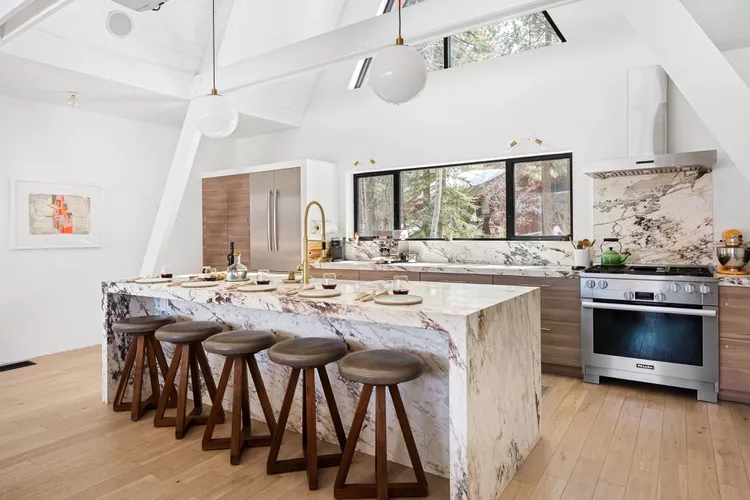
Let’s be honest: It’s hard to have perfectly clean countertops all the time—especially after spending time prepping a big meal and then washing dishes afterward.
Luckily, some of the most Pinterest-worthy countertop materials are surprisingly good for messes, and interior designers are letting us in on their favorite low-maintenance, high-style countertop colors.
Here are five designer-approved countertop picks and how to clean them.
Veined Quartz in Gray or Taupe
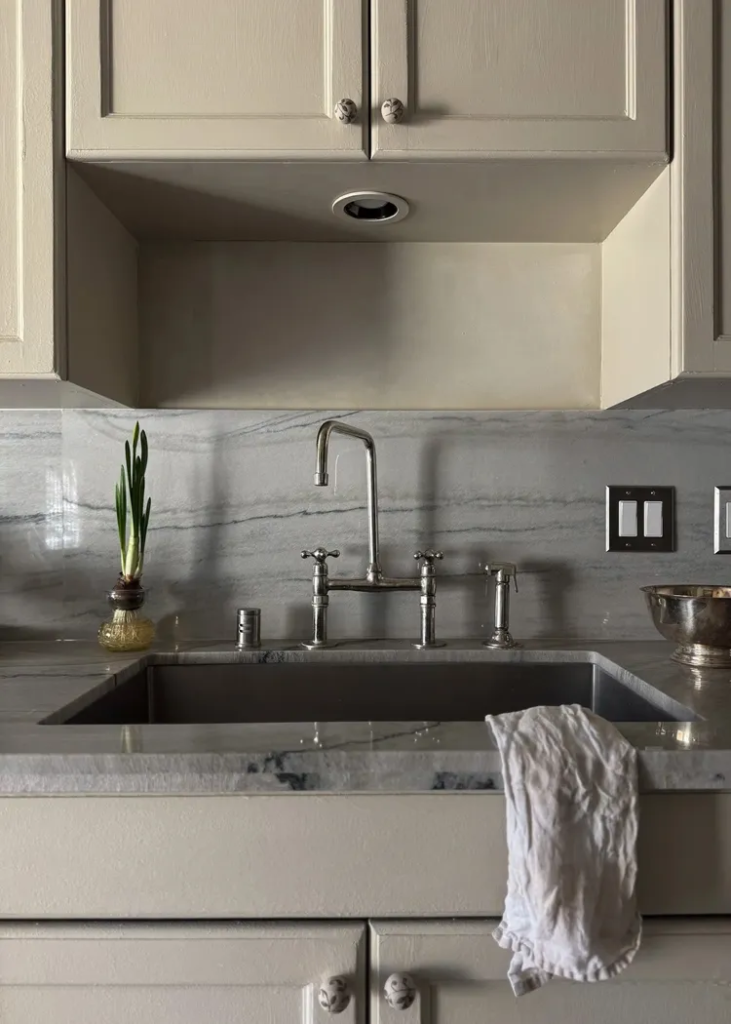
“Engineered quartz, simply known as quartz nowadays, is a great countertop material for those prioritizing durability as well as looks,” interior designer Thomas Borcherding says.
Although most quartz countertops are man-made and don’t need sealing, Bocherding also notes that natural quartzite shares similar mess-proof properties once sealed. Both varieties feel luxurious and have a similar veined look to marble without the porous, high-maintenance nature and tendency to absorb spills.
“When properly sealed, these countertops should easily wipe clean with the help of a little dish soap,” Borcherding says. “Avoid using overly acidic or alkaline cleaners, such as those with citric acid or baking soda.”
Look for subtly veined variations of quartz in light neutral colors like taupe and gray to help hide fingerprints and smudges.
Speckled Granites in Beige, Brown, Black, and White
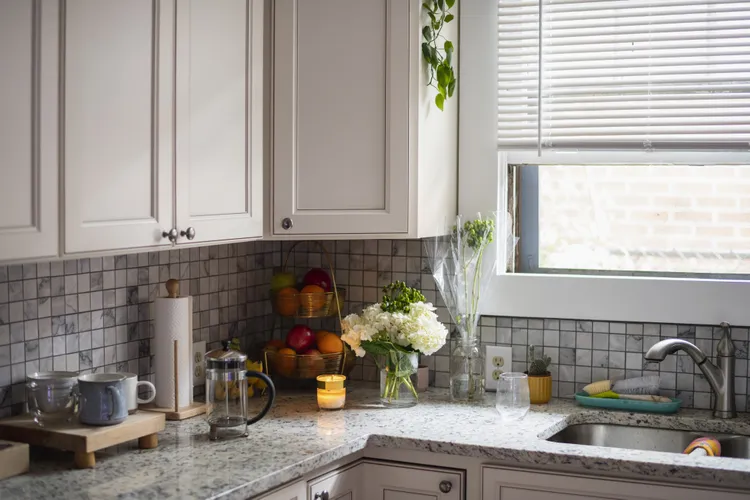
Loved by designers and available in a range of colors and speckled and veined patterns, the natural appearance of granite countertops makes it harder to spot cooking stains and spills.
“In granite, salt and pepper blends, warm beige, and mid-tone browns with a bit of natural movement are particularly effective in making the little messes far less noticeable,” interior design specialist Seymen Usta says. “Granite styles that speckle in a variety of tones are also great at camouflaging daily use.”
Much like quartzite, granite needs to be sealed; because it’s porous, you’ll have to stay on top of spills when they happen, and re-seal the surface every six to 12 months with water-based sealant or every five to 10 years with solvent-based.
To maintain the sealant, skip using overly acidic or basic cleaners, foams, abrasives, and pantry staples like lemon and baking soda, and keep it simple with a pH-neutral cleaner.
Dark Butcher Block
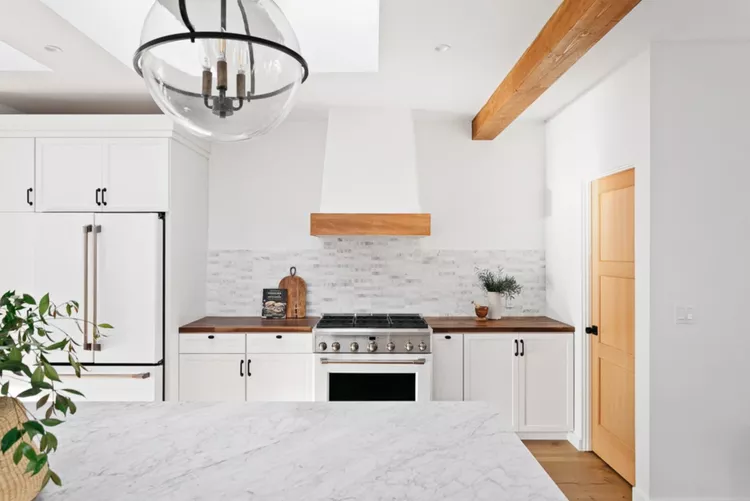
For a timeless kitchen full of warmth and character—plus an easy way to conceal daily messes—butcher block countertops in darker hues are the way to go.
“I love wood countertops, and have had them in several kitchens,” designer Peter Spalding shares. “They are so easy to clean and, unlike many stone surfaces, you are not constantly chasing those water and grease spots that can drive a tidy person insane.”
Just like with our designers’ other favorite countertop materials, mild dish soap and warm water are your best bets for cleaning; you can also add white vinegar for disinfection and an extra-deep clean, and use a lemon and salt on stubborn stains.
Stainless Steel
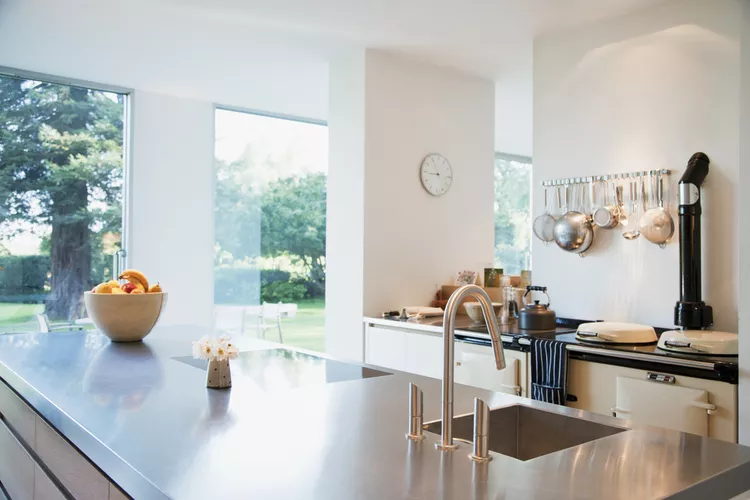
Good news if you’re a fan of more modern, industrial-style kitchens: according to Usta, stainless steel is one of the best kitchen countertop choices for stain and heat resistance.
It’s the most popular kitchen sink material for a reason—with anti-rust, antimicrobial, and rust, water, and scratch-resistant properties, it’s an ideal choice for even the most messy of home chefs.
To clean stainless steel countertops, Usta recommends warm water or a mild cleaner. Despite the name, you’ll want to avoid the the use of any steel wool, which can cause small scratches on the surface, and skip abrasive scrubs and cleaners for the same reason.
Laminate
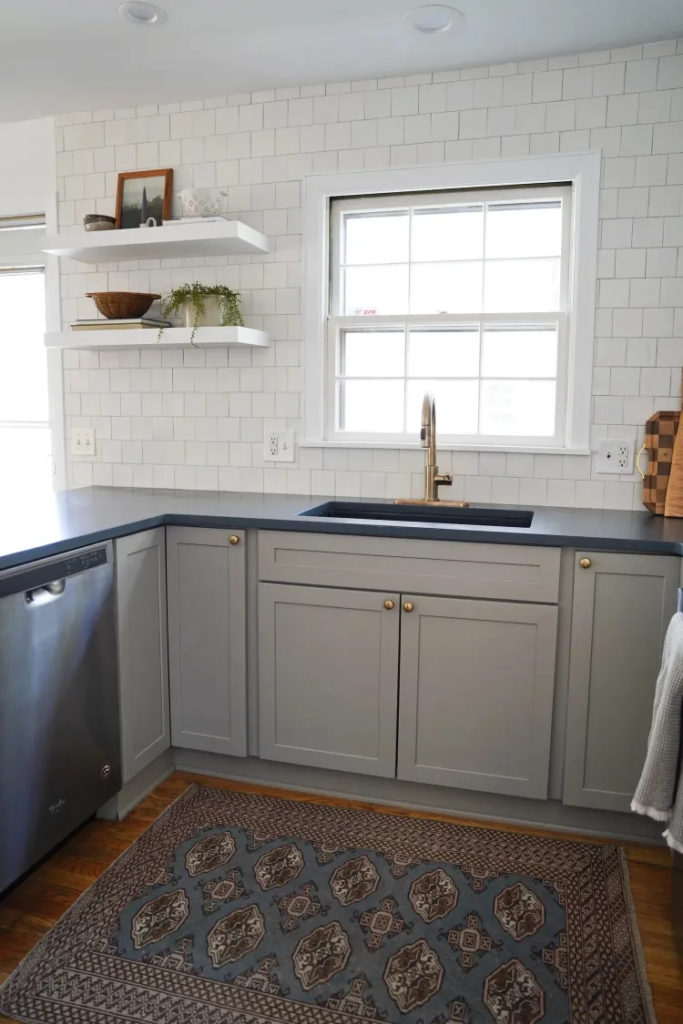
Laminate counters just might be making a comeback, especially because there there are endless colors and patterns to pick from at a lower price point. According to Spalding, darker shades of black, charcoal, and dark brown are easy to clean and are surprisingly chic.
“You just need to use solid colors,” he says. “Stay away from the ones that masquerade as other materials.”
Although it’s easy to clean, laminate isn’t as durable as other countertop materials. To avoid causing any damage, use your go-to mild dish soap and warm water (not hot).