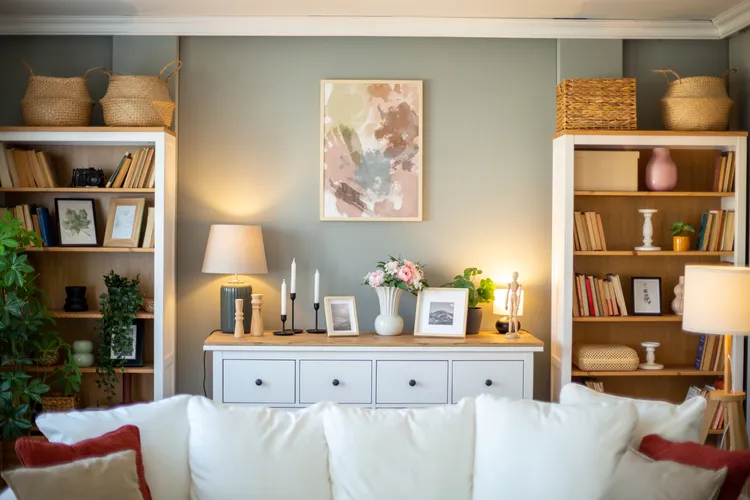
If you’re dealing with a room that feels cramped, it might not actually be the square footage that’s the problem but the way you’ve arranged certain decor, like wall art. That’s right, your most beloved art pieces could unknowingly be making your space feel tighter than it really is, according to interior designers.
Thankfully, we talked to design pros who told us how you can avoid making a room feel too-small with art, and it all comes down to the size and placement of the pieces in your collection.
The Most Common Wall Art Mistake
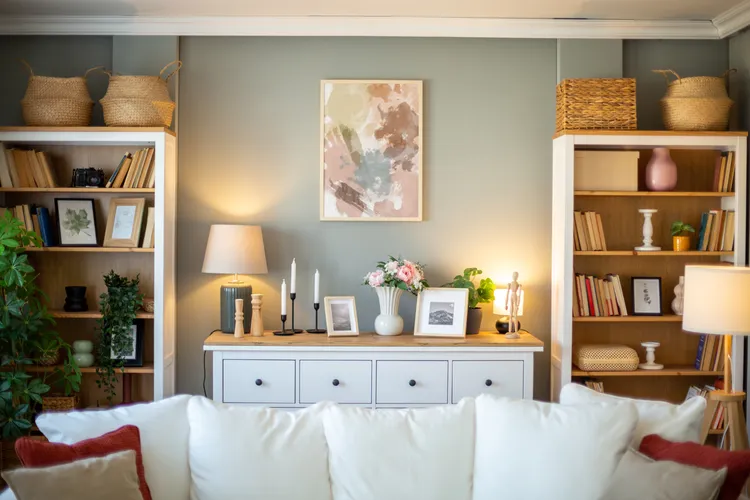
According to the pros, many people choose the wrong size for their wall decor pieces. For example, Lucy Harrison, interior designer at SouthPark Interiors,, says disproportionately large pieces can make a small room suffocating.
“Hang large art on a wall that is too small, and the room feels crowded,” she says. “Improper use of wall art that is extremely large can dominate the entire area and make the space feel unbalanced.”
But don’t fall into the trap that you need to hang small pieces on the wall in a small room. Weatherspoon says that too many pieces of smaller wall art can also make your room feel tight because it causes the space to appear cluttered.
Ultimately, it’s all about picking the right proportions and spacing the artwork properly.
Why The Spacing of Your Artwork Matters, Too
Starting off with the incorrect size for your pieces can make a room feel smaller, but the placement can also throw off balance and visual cohesion. Wall art that sits too high above furniture can actually shorten the perceived height of your furniture.
“People hang art way above eye level, and all that does is disconnect you from the space,” Kia Weatherspoon, founder and president of Determined By Design, says. “Keeping pieces at eye-level grounds the room and keeps you inside the experience of it.”
And if you’re hanging more than one piece on the same wall, Harrison says spacing, alignment, and wall margins are an “unnoticed” element of design that can make a room “feel off” and advises arranging your frames with that in mind.
“You need artwork that is carefully measured for the area in which it is being hung and styled,” she says.
The Correct Way To Size & Hang Your Wall Art
The best way to choose pieces that are the right size from the start is to measure your furniture. Following the 2/3 rule is a helpful hack for making sure the dimensions of your decor pieces will correlate with the room’s other elements.
To do this, you’ll need to measure the furniture that’s sitting against the wall where you plan to hang your piece. For example, if you have a sofa that measures 89 inches, you’ll want to get a piece that’s 2/3 that size (which comes out to 59.3 inches).
Then, when it comes to hanging, designers recommend hanging art 57-60 inches from the floor, or at least 8-12 inches above the top of your furniture. You can go a bit higher if the room is somewhere you’ll mostly be standing, like an entryway or hallway.
Do You Have to Completely Skip Oversized Art in a Small Space?
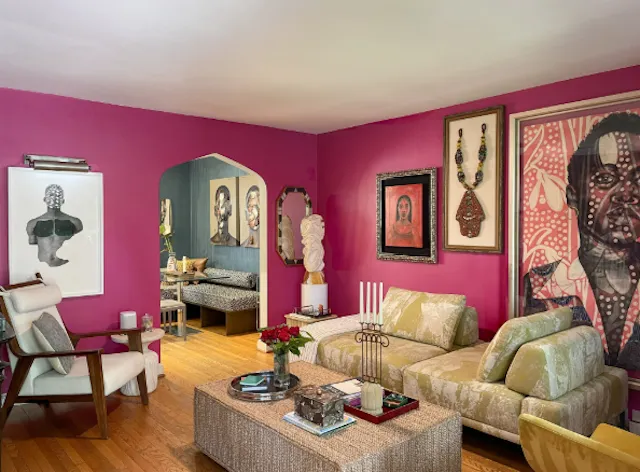
In short, definitely not! Although a too-big artwork on a too-small wall is a no-go, choosing something overtly oversized can also make a dramatic design statement.
When it comes to picking art for a small room, the goal should be intentional, not accidental, so in some cases, a large artwork will still work.
“An oversized art piece can actually make a tight room feel bigger because it expands the visual field instead of chopping it up,” Harrison says. “The same goes for mirrors. Don’t stop at one timid mirror on the wall. Use a large-scale mirror or even a cluster of them to bounce light and open the room.”
If you want to go with large art, consider pieces that will elongate and brighten the room.
As Weatherspoon says, “overscaled art, thoughtfully placed mirrors, and the right hanging height — these three decisions alone can transform the entire perception of a room’s size.”