Your home’s siding and roofing may be in pristine condition, and its surrounding landscape and lawn flawlessly manicured, but if there’s an exposed outdoor AC unit (or compressor) visible from the street, it could undo all those great features that would otherwise give your home curb appeal.
Thankfully, there are numerous creative ways to hide an outdoor AC unit, some of which are easily DIY-able after a quick trip to your local home-improvement store. We asked designers to share some of their tried-and-true methods. Here’s what they had to say.
Screen It
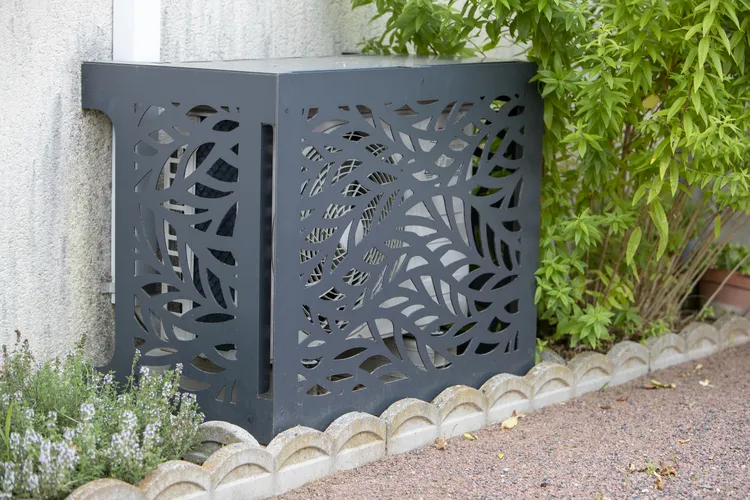
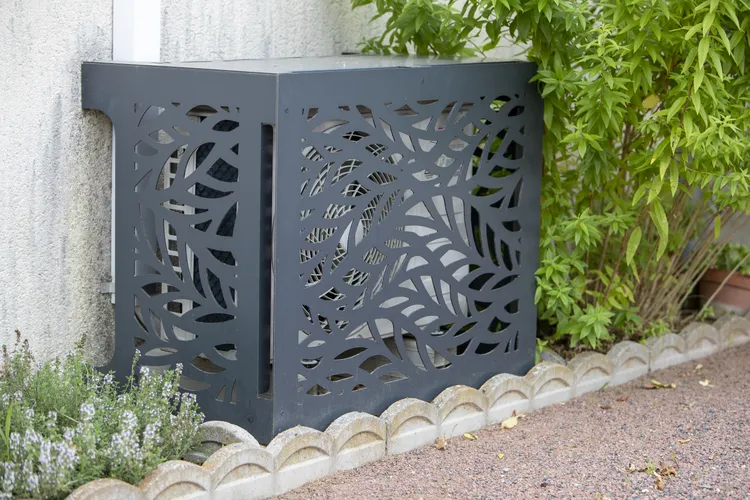
Decorative screens or slatted wood panels are easy, effective options that blend well with most exteriors, according to Joe Waroquier, founder of Joe Waroquier HOME. Best of all, there are plenty of premade screens specifically geared toward concealing while ventilating machinery or storage, or for general outdoor privacy.
A teak wood–slat screen is visually sleek and can complement a wide range of home and yard styles. Or consider a trellis- or lattice-style screen, with or without climbing vines, to give off homey garden vibes. You can also try building your own unique screen using a decorative metal grill or panel perforated or laser-cut with your pattern of choice. Just be sure that all the materials you’re using are outdoor-rated.
A green (living) wall is another excellent screening option, whether replete with genuine living plants or faux flora. Landscape design-build company Ventures turned to an artificial green wall to conceal both the AC and pool equipment in one project.
“This solution not only hid the mechanics but also added a modern design element that complements the clean lines of this particular patio and pavilion,” says Jake Steward, lead designer at Ventures.
Fence or Box It In
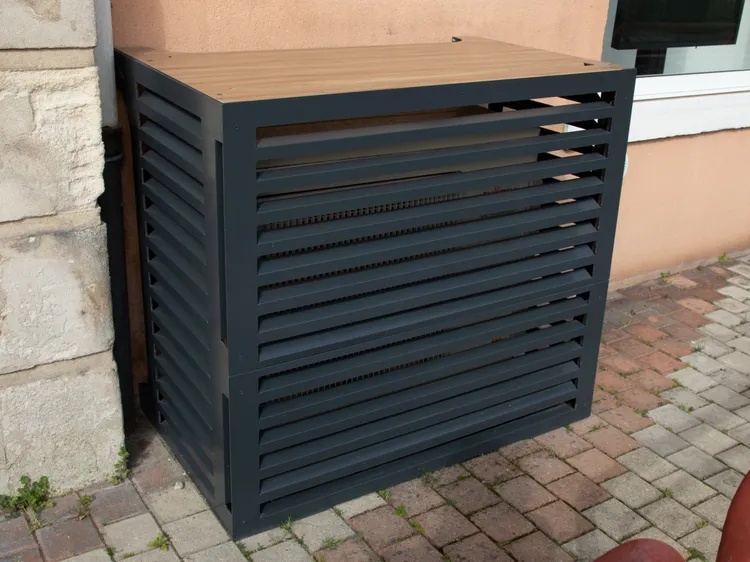
Instead of screens and panels, consider enclosed fencing or box-like covers with an operable gate or door on one side for easy access.
The opening is always necessary as HVAC techs may need to reach the unit to recharge it, diagnose electrical problems, replace it, etc., advises Nick Martzahl, owner of Valley Hardscapes.
Just like fencing for the backyard or front lawn, there’s a smorgasbord of styles and materials you can choose from to complement your home’s aesthetic.
If you’re on a budget, Martzahl recommends installing 3- to 4-inch chain-link fencing and covering it with slats to make it look more refined.
Build a Wall
Building a small retaining wall–type barrier with bricks, stones, or breeze blocks can be a good and aesthetically pleasing option, but make sure to build up on only two sides of the AC unit. (One side will automatically be closed off as it will likely be facing the house.)
As mentioned previously, you need to leave the fourth (final) side open to provide access for when things go awry and repairs are required.
Plant Some Greenery
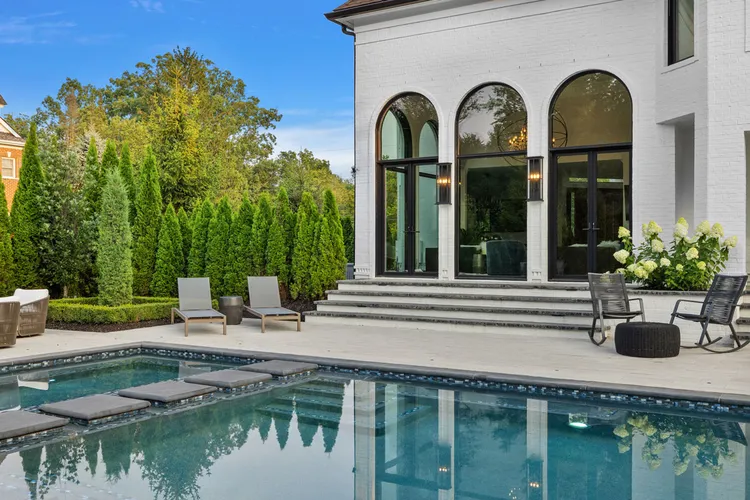
Steward recommends hiding the unit using arborvitae (evergreen trees), as they’re narrow, dense, and low-maintenance—ideal for tight spaces and year-round coverage. In one project, he used staggered rows of arborvitae to create a soft, natural screen around the utility area.
“The goal wasn’t just to hide equipment, but to turn a visual eyesore into something that complements the design and elevates the space.”
Waroquier also prefers a natural barrier if possible and suggests surrounding the unit with tall grasses or low-maintenance shrubs like the arborvitae. Once again, whichever route you go, be sure to leave enough space for ventilation and an open side for easy access.
Raise a Flower Bed
Consider using raised planters or pairing a retaining wall or decorative screen with potted plants. It’s a great way to include more greenery and flora, and to make it blend into the rest of the landscape or take all of the focus away from the unit. But always remember to leave an opening for unit access.
And, “pairing screens with plants or tall greenery makes the concealment feel intentional rather than purely functional,” Steward says.