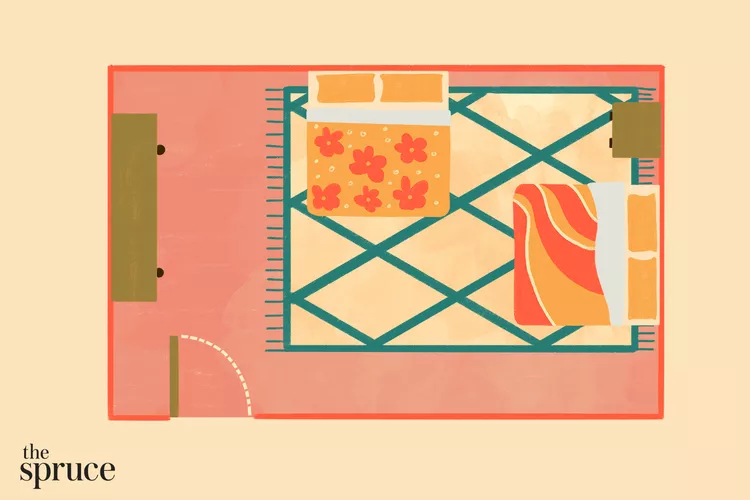
Tips for creating balance in life and at home
The Chinese concept of feng shui focuses on establishing harmony between a person and their environment. It is derived from an ancient poem about human life being connected to and flowing with the environment around it. Feng shui comes from the Chinese words “feng,” meaning wind, and “shui,” meaning water.
Feng shui is often incorporated into home design to create balance and flow in your home’s design and overall life. But how do you put feng shui into practice? Below are the basic feng shui principles and how to apply them to your life and home.
What Is Feng Shui?
Feng shui is the practice of arranging pieces in a living or workspace to create balance with the natural world. This is what it means to feng shui your home. The goal is to harness energy forces and establish harmony in the space.
Principles of Feng Shui
In feng shui design, there are four main principles to know:
- Chi: Chi is the vital life force or energy. Chi is a major component when designing your home with feng shui.
- Commanding position: This term refers to the spot in a room farthest from the door (but not in direct line with it). The commanding position designates where you’ll want to spend the most time in a space. You will want a clear line of sight to the door from the commanding position to have the best feng shui possible.
- Bagua: Bagua is the feng shui energy map. It is a Chinese word that means “eight areas.” Each area relates to a particular life area.
- Five elements: Feng shui has five elements: earth, metal, wind, water, and fire. When incorporating feng shui into your home, balance these five elements.
Chi in Feng Shui
Chi refers to vital life force or energy. It is an essential aspect of feng shui design. A large room with little furniture can overwhelm chi, making one feel lost.
On the other hand, a small room packed with clutter doesn’t give chi space to move, resulting in feelings of stagnation.
The Commanding Position
In feng shui, the commanding position is a spot in the room far from the door, ideally not in line with it, and gives you a good view of both the room and door; it usually should put you diagonal to the door.
The commanding position is where you want to spend most of your time in a room, and therefore, it should host the most prevalent piece of furniture: a bed in a bedroom, a desk in an office, or a stove in a kitchen.
These pieces of furniture must stand in the dominant position because each one represents an important part of your life: The bed represents you, the desk represents your career, and the stove represents your wealth and nourishment.
The Feng Shui Bagua Map
A bagua is the feng shui energy map superimposed on the floor plan of your home. The Chinese word “bagua” translates to mean “eight areas.”
Each area relates to a different life circumstance, such as family, wealth, or career, and each one has corresponding shapes, colors, seasons, numbers, and earthly elements. At the center of the bagua—a ninth area—is you, representing your overall wellness.
There are several feng shui schools of thought, all of which use baguas. However, some apply the bagua differently.
The Western and BTB (Black Sect) schools usually lay the bagua so that the knowledge, career, and helpful people areas align with the front door. The Flying Stars and other classical schools might orient the bagua based on the year’s energy or the compass.
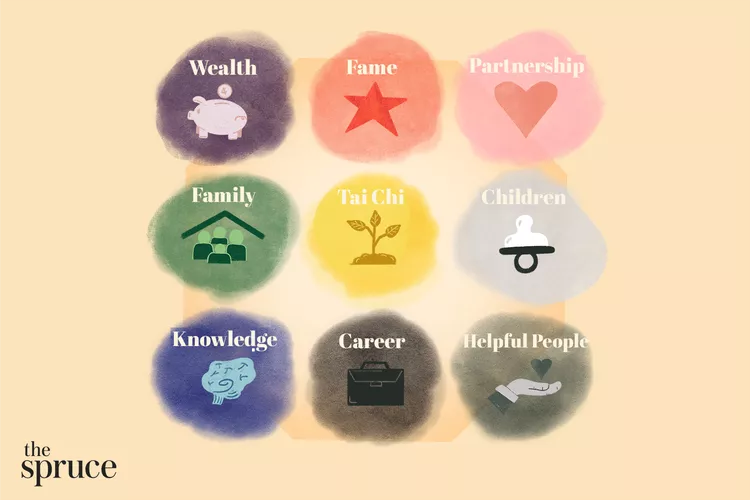
The Bagua Areas
Begin incorporating the bagua into your life and feng shui by identifying one to three areas that you feel need the most attention. Do not attempt to work on all areas at once, as this can unsettle and easily overwhelm your self. To strengthen your energy or improve flow, incorporate feng shui tips in that particular room or area.
Family (Zhen)
- Representing: Family, new beginnings
- Shape: Columnar, rectangular
- Colors: Green, blues, teal
- Season: Spring
- Number: 4
- Element: Yang wood
Wealth (Xun)
- Representing: Wealth, abundance, prosperity
- Shape: Columnar, rectangular
- Colors: Purple
- Season: Spring
- Number: 5
- Element: Yin wood
Health (Tai Qi)
- Representing: Overall wellness, the center
- Shape: Flat, square
- Colors: Brown, orange, yellow
- Season: Transitions between the seasons
- Number: 5
- Element: Earth
Helpful People (Qian)
- Representing: Helpful people, benefactors, travel
- Shape: Circular, spherical
- Colors: Gray, metallics
- Season: Autumn
- Number: 6
- Element: Yang metal
Children (Dui)
- Representing: Children, completion, joy
- Shape: Circular, spherical
- Colors: White, metallics
- Season: Autumn
- Number: 7
- Element: Yin metal
Knowledge (Gen)
- Representing: Knowledge, self-cultivation, skillfulness
- Shape: Flat, square
- Colors: Dark blue
- Season: Transitions between the seasons
- Number: 8
- Element: Yang earth
Fame (Li)
- Representing: Fame, reputation, passion, visibility
- Shape: Triangle, pointy
- Colors: Red
- Season: Summer
- Number: 9
- Element: Fire
Career (Kan)
- Representing: Career, path in life
- Shape: Wavy, curvy
- Colors: Black
- Season: Winter
- Number: 1
- Element: Water
Partnerships (Kun)
- Representing: Partnerships, marriage, self-care
- Shape: Flat, square
- Colors: Pink
- Season: Transitions between the seasons
- Number: 2
- Element: Yin earth
The Five Elements
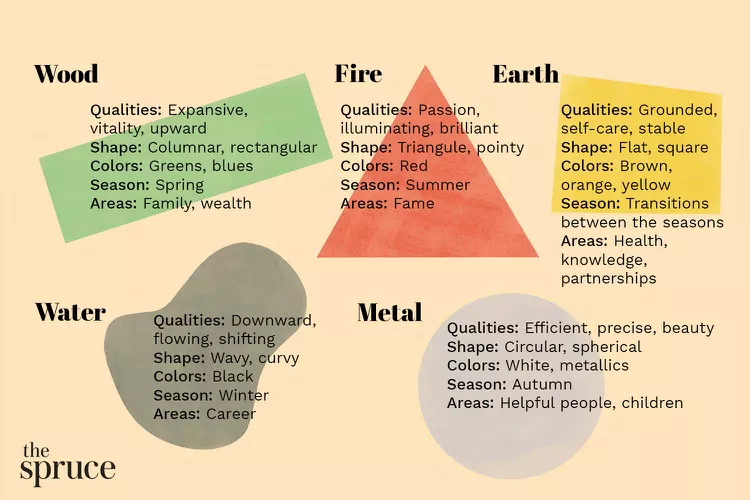
The five feng shui elements—earth, metal, water, wood, and fire—come from the Taoist tradition. The elements are interrelated life phases that create a complete system. When you feng shui your home, you balance these five elements.
Incorporate the five feng shui elements into your life and home by defining where to begin. Choose one to three areas you’d like to improve, then strengthen the energy by adding the suggested colors or shapes in that room.
For example, your bagua shows that your bedroom aligns with your overall wellness and the place where you rejuvenate. It ties into the earth element. Consider ways to use feng shui colors associated with the earth and decorate with ceramic or clay pottery, stones, or crystals.
After those initial improvements, focus on other rooms or areas of your life. Observe the elements of each room, and then bring the corresponding feng shui items. The intent is to bring positive energy to those rooms, areas of your life, and your entire home.
Earth
- Qualities: Grounded, self-care, stable
- Shape: Flat, square
- Colors: Brown, orange, yellow
- Season: Transitions between the seasons
- Areas: Wellness, knowledge, partnerships
Metal
- Qualities: Efficient, precise, beauty
- Shape: Circular, spherical
- Colors: White, metallics
- Season: Autumn
- Areas: Helpful people, children
Water
- Qualities: Downward, flowing, shifting
- Shape: Wavy, curvy
- Colors: Black
- Season: Winter
- Area: Career
Wood
- Qualities: Expansive, vitality, upward
- Shape: Columnar, rectangular
- Colors: Green, blues
- Season: Spring
- Areas: Family, wealth
Fire
- Qualities: Passion, illuminating, brilliant
- Shape: Triangle, pointy
- Colors: Red
- Season: Summer
- Area: Fame
Tips to Feng Shui Your Home
- Decorate with plants: Feng shui plants, especially ones with rounder and softer leaves, such as the money plant, nourish your energy.
- Consider positions: Keep your stove, desk, or bed in the commanding position—the spot farthest from the door but not directly aligned with it. You may also want to consider your home direction.
- Balance colors: Decide which bagua areas to improve and choose corresponding colors to strengthen that energy. For example, green is used for family (zhen), and purple is used for wealth (xun).
- Declutter: Excessive clutter causes blocked chi. Let go of excess items that take up valuable space.
- Keep traffic flow open: Passageways, such as doors and halls, should be kept open to clear your route. Avoid placing furniture at the entrance of a room.
- Fix broken things: Fixing anything that may be broken in your home will improve the chi of a space. Broken mirrors must be removed or replaced.
- Use the five elements: One of the best ways to feng shui in your home is to use the five elements (earth, metal, water, wood, and fire). Make sure each element is balanced and incorporated in the appropriate spaces.
- Have a strong entryway: The entryway is where energy enters your space and life. Create a space that is warm, bright, and clutter-free.
- Maximize natural light: Rooms with ample sunlight enhance well-being and vitality. Position windows to stream in light or use mirrors to amplify natural light (although beware of positioning with furniture).